Electric vehicles (EVs) are becoming an important part of the future of sustainable transportation. With the increasing demand for electric cars, bikes, scooters, and commercial vehicles, the need for reliable electric vehicle charging infrastructure is also growing. A Solar Charging Station for Electric Vehicles PPT helps students, engineers, entrepreneurs, and renewable energy professionals understand how solar energy can be used to charge electric vehicles.
The Institute of Solar Technology (IST) provides solar energy training and technical learning resources to help students develop practical knowledge of renewable energy technologies, solar power systems, and EV charging infrastructure.
Solar Power EV Charging Station Design Course
 Combo course including Solar PV Technology, Lithium-ion Battery Technology and EV Charging Station Technology
For working professionals, early morning or night class slot available
Solar charging stations for electric vehicles have emerged as one of the best ways to reduce India’s dependence on fossil fuels. Nearly everyone who owns an Electric vehicle will install a solar charging station in their home. Certificate in Solar Power EV Charging Station (Design and Development) Training Program is a master courses that takes an Engineer, designe engineer, installer from site assessment, all the way through power-up and pinpointing.
Admission going on for Dec - 2026
What Is a Solar Charging Station for Electric Vehicles?
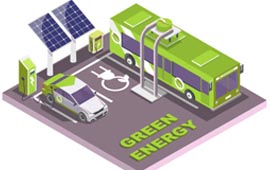
A solar charging station for electric vehicles is a charging facility that uses electricity generated from solar photovoltaic (PV) panels to charge electric vehicles. It converts sunlight into electrical energy and supplies power to EV charging equipment.
A solar-powered EV charging station can operate through different configurations, including grid-connected, off-grid, and hybrid solar systems.
Main Components of a Solar EV Charging Station
A solar-powered electric vehicle charging station generally consists of the following components:
Solar PV Panels: Convert sunlight into DC electrical energy.
Solar Inverter: Converts DC electricity into AC electricity for compatible EV chargers.
Battery Energy Storage System: Stores excess solar energy for later use.
EV Charging Station: Supplies electrical power to electric vehicles.
Charge Controller: Controls battery charging in systems where a solar charge controller is required.
Protection Devices: Include MCBs, MCCBs, fuses, surge protection devices, and earthing systems.
Mounting Structure: Supports solar panels at the required tilt and orientation.
Monitoring System: Monitors solar generation, energy consumption, and charging performance.
Types of Solar EV Charging Stations
1. Grid-Connected Solar EV Charging Station
This system connects solar PV generation with the utility grid. Solar energy is used to charge EVs, while the grid can provide additional electricity when solar generation is insufficient.
2. Off-Grid Solar EV Charging Station
An off-grid system operates independently of the electricity grid. It generally requires solar panels, battery storage, an inverter, and an EV charger.
3. Hybrid Solar EV Charging Station
A hybrid system combines solar panels, battery storage, and grid electricity to provide flexible and reliable EV charging.
How Does a Solar EV Charging Station Work?
The working process of a solar-powered EV charging station is as follows:
Solar panels receive sunlight and generate DC electricity.
The inverter or power conversion system manages the electrical output.
Solar-generated electricity is supplied to the EV charging equipment.
Excess solar energy can be stored in batteries, depending on system configuration.
Stored energy can be used when solar generation is low.
Grid electricity can supplement the system when required.
Advantages of Solar Charging Stations for Electric Vehicles
Uses renewable solar energy.
Helps reduce dependence on conventional electricity sources.
Can reduce EV charging electricity costs.
Supports clean and sustainable transportation.
Can be installed in homes, offices, commercial buildings, and public parking areas.
Supports the development of green energy infrastructure.
Can be integrated with battery energy storage systems.
Applications of Solar EV Charging Stations
Solar-powered EV charging stations can be used in:
Residential buildings and housing societies.
Commercial complexes and shopping malls.
Offices and corporate parking areas.
Educational institutions and universities.
Public EV charging stations.
Highways and transportation facilities.
Industrial facilities.
Solar-powered car parking structures.
What You Will Learn from a Solar EV Charging Station PPT
A technical PowerPoint presentation on solar charging stations for electric vehicles can cover:
Introduction to electric vehicles.
Basics of solar photovoltaic technology.
Solar EV charging station architecture.
Types of solar EV charging systems.
Solar panel capacity calculation.
EV charger selection.
Battery storage sizing.
Solar inverter selection.
Electrical wiring and protection.
Earthing and safety requirements.
Solar EV charging station installation.
System operation and maintenance.
Project cost estimation and feasibility.
Career Opportunities in Solar EV Charging Technology
The growing solar and electric vehicle sectors offer opportunities for trained professionals in:
Solar PV system installation.
EV charging station installation.
Solar project design and engineering.
Electrical maintenance.
Solar EPC companies.
EV infrastructure development.
Renewable energy project management.
Solar business and entrepreneurship.
Learn Solar Technology with Institute of Solar Technology (IST)
The Institute of Solar Technology (IST) focuses on practical solar energy education and technical skill development. Students and professionals interested in solar PV technology, solar power plant installation, system design, and renewable energy applications can explore technical training opportunities.
Understanding solar EV charging technology can help learners prepare for emerging opportunities in the renewable energy and electric mobility industries.
Conclusion
Solar charging stations for electric vehicles represent an important combination of solar photovoltaic technology and electric mobility. By understanding solar PV components, EV chargers, battery storage, system design, and electrical safety, students and professionals can develop the technical knowledge required for future solar EV charging projects.
Explore renewable energy training and technical learning opportunities with the Institute of Solar Technology (IST).