Search IST Courses
Find PV Solar and Lithium-ion Battery course near by you
Similar Search results: IST DCDB Design Software Tool
Similarity search results are visible in the form of an analysis of saved visitor search keywords and a Google Console update. Search result listed bellow. To know more, go to Home Page
Institute of Solar Technology (IST) an autonomous body for startups in solar energy training, have a milestone with 12 years of experience in Entrepreneurship Business Development, a long history of operation. Institute was founded in 2012, Indian oldest institute. To know more look "About Us" section.
How IST PVSolar Simulator Handles DCDB and ACDB Design
Most PV simulation tools treat this stretch of the system as an afterthought: a flat percentage loss buried in a spreadsheet cell. IST PVSolar Simulator treats it as a real electrical design problem, and the difference shows up in how it draws, sizes, and documents both boards.DCDB: from string to switchgear, drawn and sized
The simulator's Wiring Diagram Generator builds the DC side as an explicit hierarchy: String → DCDB → MPPT → Inverter. Every inverter gets its own DCDB, stacked as a labeled column in the generated diagram ("DCDB Inv 1," "DCDB Inv 2," and so on), with the MPPT and inverter stages drawn right alongside it — so what you're looking at isn't a schematic abstraction, it's a picture of exactly how your project's strings actually terminate.Two details worth calling out for anyone who's fought with string-sizing spreadsheets before:
- Min/max ambient design temperature feeds directly into the recommended modules-per-string check, so your Voc-at-cold and Vmp-at-hot windows are respected before the wiring diagram is even generated.
- Manual re-routing is a first-class feature. Click a string's connection point, then click the DCDB or MPPT box you want it to feed instead — the diagram updates live. That matters in the real world, where the "ideal" topology sometimes has to bend around a combiner box location or a conduit run that already exists.
ACDB: the next link in the chain, sized by the same discipline
Where DCDB gets its own graphical column, ACDB is handled as the next stage in the Protection & Cable Schedule — a two-page output that pairs a compliance-oriented specification table (Item / Specification / Standard / Remark) with an actual DC-and-AC cable route diagram: String → String-to-DCDB → Inverter → ACDB. The Inverter-to-ACDB run gets its own Cable Route Length input, just like the DC-side legs, and cable sizing here is based on inverter full-load current rather than string Isc — the correct basis for an AC feeder. The AC-side topology itself is auto-selected based on project size, so a rooftop commercial system and a utility-scale plant don't get forced into the same assumed layout.For utility-scale projects, the chain doesn't stop at the ACDB. The simulator extends the same route-length-and-voltage-drop discipline through an LV-Busbar-to-Transformer and Transformer-to-33kV-Switchgear leg, and layers a full Grid Delivery Chain on top: MV step-up transformer losses (no-load iron loss plus load-dependent copper loss), an optional HV step-up transformer for the largest projects, a configurable cable-loss percentage for the run to the grid injection point, and a hard grid export limit if your interconnection agreement caps delivered power. Grid-code compliance items — reactive-power/power-factor reserve and ramp-rate limiting — are modeled as genuine annual-energy loss rows, checkable against CEA/IEGC, IEEE 1547, or EN 50549, not just noted as a compliance checkbox.
IST Solar Training included all engineering design software / tools
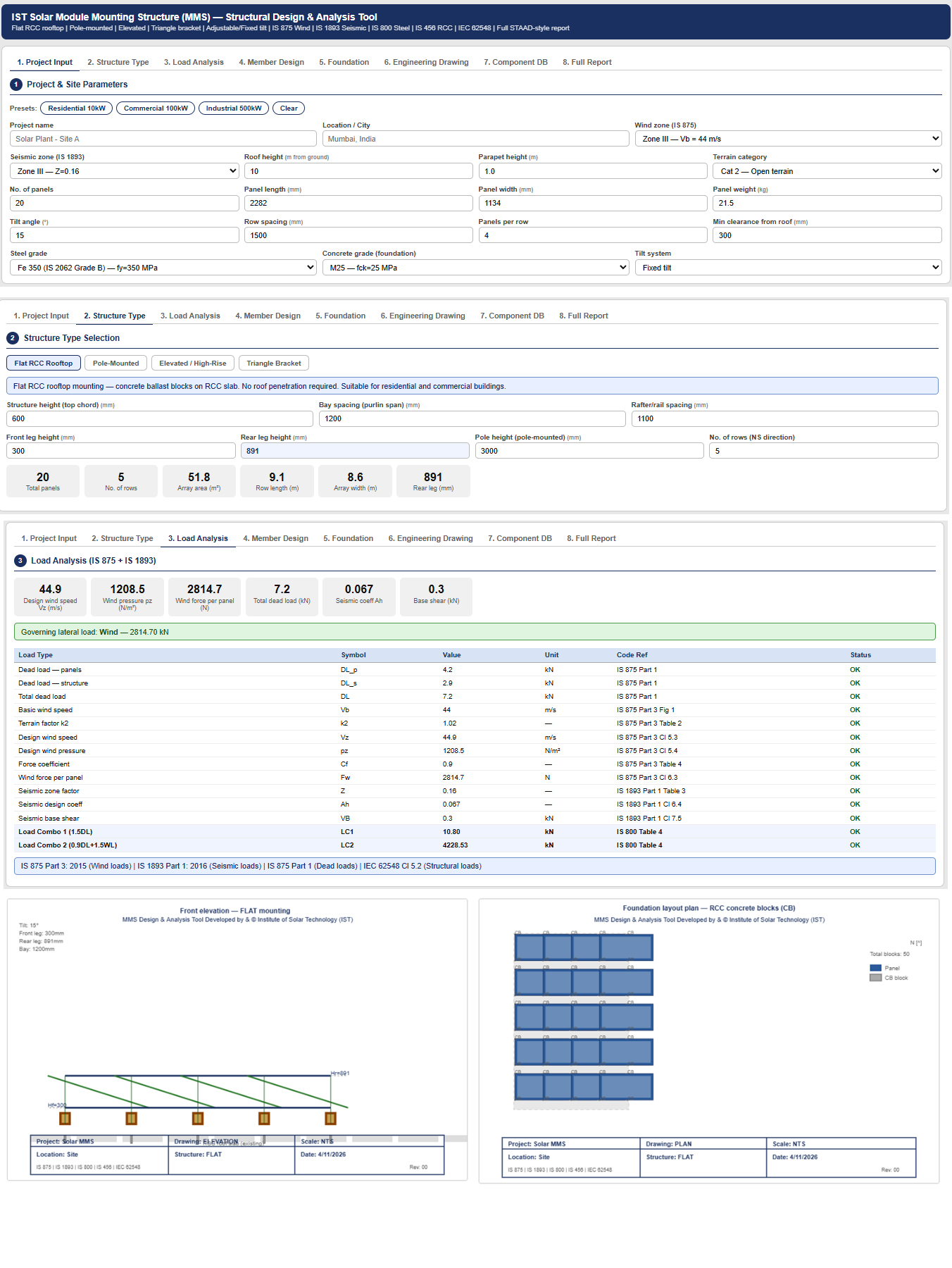
IST Solar MMS Structural Design & Analysis Tool
Full walkthrough of:1 — Project Input: Enter site parameters including wind zone (IS 875 Part 3), seismic zone (IS 1893), roof height, parapet height, terrain category, panel dimensions/weight, tilt angle, row spacing, steel grade (Fe 250/350/410), concrete grade (M20/M25/M30), and tilt system (fixed or adjustable). Three presets available: Residential 10kW, Commercial 100kW, Industrial 500kW.
2 — Structure Type: Select from Flat RCC Rooftop, Pole-Mounted, Elevated/High-Rise, or Triangle Bracket. Configure front/rear leg heights (rear leg auto-calculated from tilt angle), bay spacing, pole height, and row count. Live summary shows total panels, array area, row length, and geometry.
3 — Load Analysis: Full IS 875 Part 3 wind analysis (Vb → k2 → Vz → pz → Cf → Fw) and IS 1893 seismic analysis (Z → Ah → base shear). Generates all load combinations (LC1–LC4) per IS 800 Table 4, identifies governing lateral load.
4 — Member Design: IS 800:2007 limit state checks for bending (Cl 8.2), shear (Cl 8.4), compression/buckling (Cl 7.1), deflection (L/300), and connection bolt capacity. Auto-selects adequate section from database. Pass/Fail with utilisation percentages.
5 — Foundation: IS 456:2000 RCC concrete block design — block sizing, bearing capacity, overturning stability (FoS ≥ 1.5), minimum steel area, chemical anchor selection, and concrete grade checks. Total block count calculated.
6 — Engineering Drawing: Four views — front elevation, foundation layout plan, cross-section, and connection detail — all auto-generated from your input parameters. Download as PNG.
7 — Component Database: steel sections (ISMC, ISA, SHS, RHS), fasteners & bolts (IS 1367), solar panels, and foundation blocks. All with full specifications.
8 — Full Report: STAAD-style engineering report covering all 11 sections including code references, load tables, material specs, member check summary, quality assurance checklist. Print or copy to clipboard.
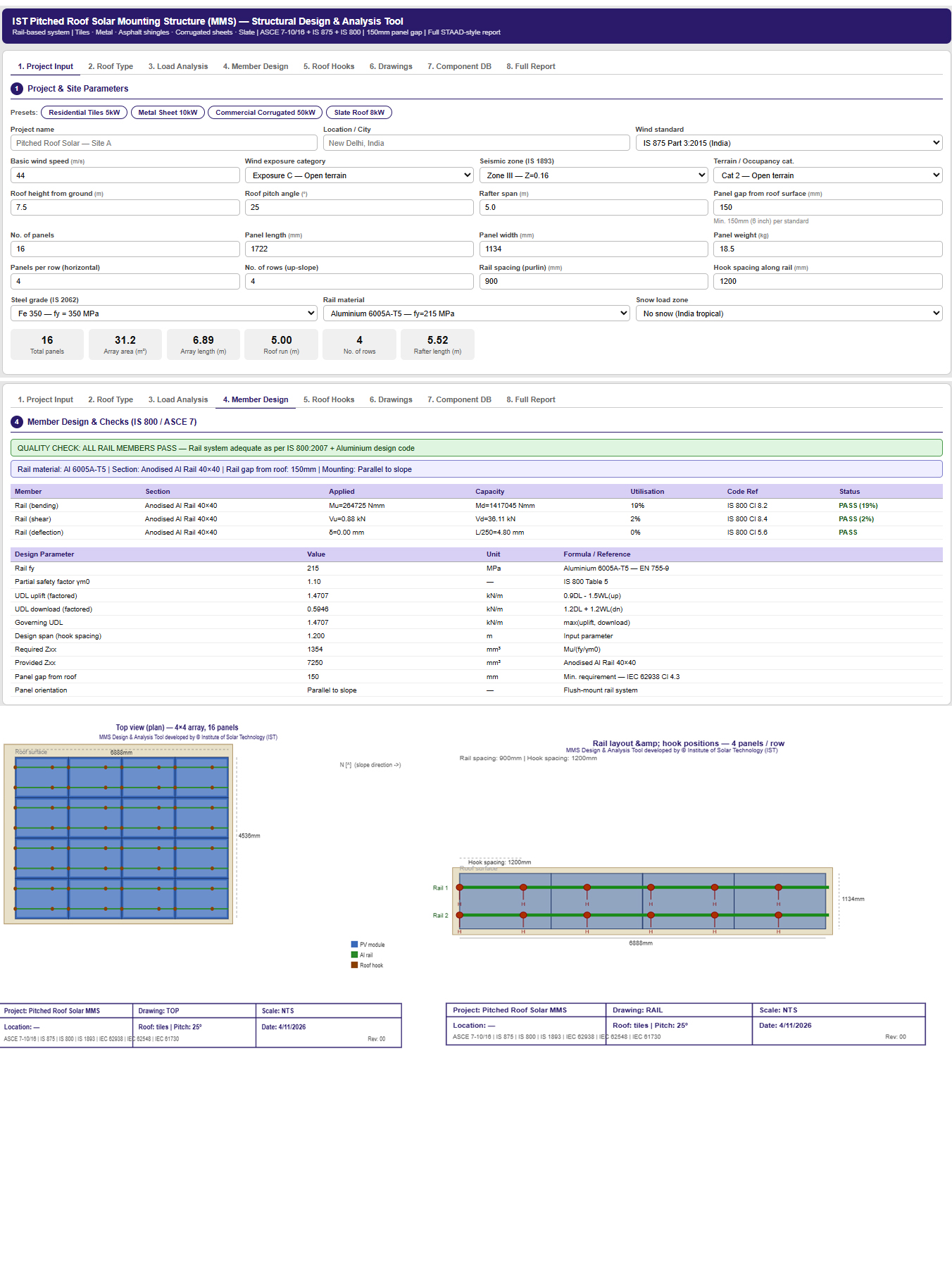
IST Pitched Roof Solar MMS Structural Design & Analysis Tool
1 — Project Input: Wind standard selection (ASCE 7-10/16 or IS 875 Part 3), basic wind speed, exposure/terrain category, seismic zone, roof height, pitch angle, rafter span, panel gap (locked to 150mm minimum per IEC 62938), panel dimensions/weight, rail and hook spacing, steel grade, rail material (Al 6005A-T5, 6063-T6, Steel, SS316), and snow zone.2 — Roof Type: Six roof surfaces — Clay/Concrete Tiles, Metal Sheet, Corrugated Sheet, Asphalt Shingles, Slate, and Standing Seam Metal. Each auto-fills the correct dead load, hook type, waterproofing method, and tile overlap. Standing seam is highlighted as no-penetration (best option).
3 — Load Analysis: Complete wind analysis per ASCE 7-10/16 or IS 875 Part 3 including uplift and download coefficients specific to pitched roof panels, plus dead load, snow load (IS 875 Part 4), seismic base shear (IS 1893), and all five load combinations per IS 800 Table 4.
4 — Member Design: IS 800:2007 limit state checks for aluminium rail — bending (Cl 8.2), shear (Cl 8.4), and deflection (L/250). Auto-selects adequate rail section from database with utilisation percentages and pass/fail.
5 — Roof Hooks: Pull-out and shear capacity checks for the selected hook type with factor of safety ≥ 2.0. Waterproofing specification and galvanic isolation details per IEC 62938.
6 — Drawings: Four views — side elevation (showing pitch angle, 150mm gap, rails, hooks), top plan view (array layout with hooks), rail layout with hook positions and dimensions, and hook/bracket connection detail. All download as PNG.
7 — Component Database: Full CRUD for Rails/Profiles, Roof Hooks & Clamps, Mid/End Clamps, Fasteners, and Solar Panels with all specifications.
8 — Full Report: 13-section STAAD-style report covering all codes (ASCE 7, IS 875, IS 800, IS 1893, IEC 62938, IEC 62548), load tables, member design, hook design, installation notes, and quality checklist. Print or copy to clipboard.
Calculation of electrical energy with solar power plant design
Learn the design fundamentals of photovoltaic projects. Gain knowledge and skills from engineers with real-life experience in solar energy and electrical delivery fields. You will also understand solar plant components and PV modules; DC system and AC collector design; civil and geotechnical issues; and interconnection to distribution and the bulk power grid.
A comparative analysis of Next generation solar power plants
Who Should Attend?
This course will benefit those new to the field of solar energy and those in need of a refresher, including:
- Renewable energy developers
- Electric utility design or planning engineers
- Power system dispatchers
- Consulting engineers
- Project managers
- Managers of design departments
- Engineering technicians
Solar Project Design Master Course (Rooftop and Large solar system)
 Huge job opportunity Solar Design engineer job
Search Solar Design Engineer Job
For working professionals, early morning or night class slot available
👉 Introduce with Mentor
Solar Power Plant Releated Cloud Software access -
👉Know about IST SunPower System solar software
- Site Assessment
- Hybrid On-Grid System Simulation
- Solar DCDB Design
- Solar ACDB Design
- Solar Power Plant SLD
- Solar Project Quotation
- Solar Project Bankability Report
- Solar Power Plant BOQ
Admission going on for 2nd Batch of Nov - 2026
PV Technology & Business Management - Business Course (Online)
(Rooftop and Large solar system)

Institute of Solar Technology (IST) cover business opportunities in Residential, Public Sector, Commercial and Industry.
Solar Power Plant Releated Cloud Software access -
👉Know about IST SunPower System solar software
- Site Assessment
- Hybrid On-Grid System Simulation
- Solar DCDB Design
- Solar ACDB Design
- Solar Power Plant SLD
- Solar Project Quotation
- Solar Project Bankability Report
- Solar Power Plant BOQ
Admission going on for Nov - 2026
Lithium-ion Battery Pack Assembly course (Solar, Energy storage and EV Battery)
 Don’t wait any longer to learn about Lithium-ion, Take our business Course today and start your journey towards a more sustainable future.
For working professionals, early morning or night class slot available
👉 Introduce with Mentor
Practical training - cell sellection, cell IR testing, cell balancing, charge discharge testing, module & pack assembling, enclosure selection, all machinery selection, assembly line planning and layout drawing, costing of assembly line, working capital, investment, ROI, business projection making, different product design.
Battery Pack Design Cloud Software access from IST E-Library-
- 2W 3W Battery Pack Software
- ESS Battery Pack Software
Admission going on Nov - 2026
Solar Power EV Charging Station Design Course
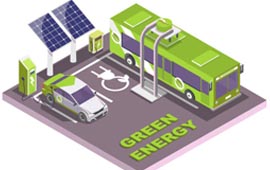 Combo course including Solar PV Technology, Lithium-ion Battery Technology and EV Charging Station Technology
For working professionals, early morning or night class slot available
Solar charging stations for electric vehicles have emerged as one of the best ways to reduce India’s dependence on fossil fuels. Nearly everyone who owns an Electric vehicle will install a solar charging station in their home. Certificate in Solar Power EV Charging Station (Design and Development) Training Program is a master courses that takes an Engineer, designe engineer, installer from site assessment, all the way through power-up and pinpointing.
Admission going on for Nov - 2026
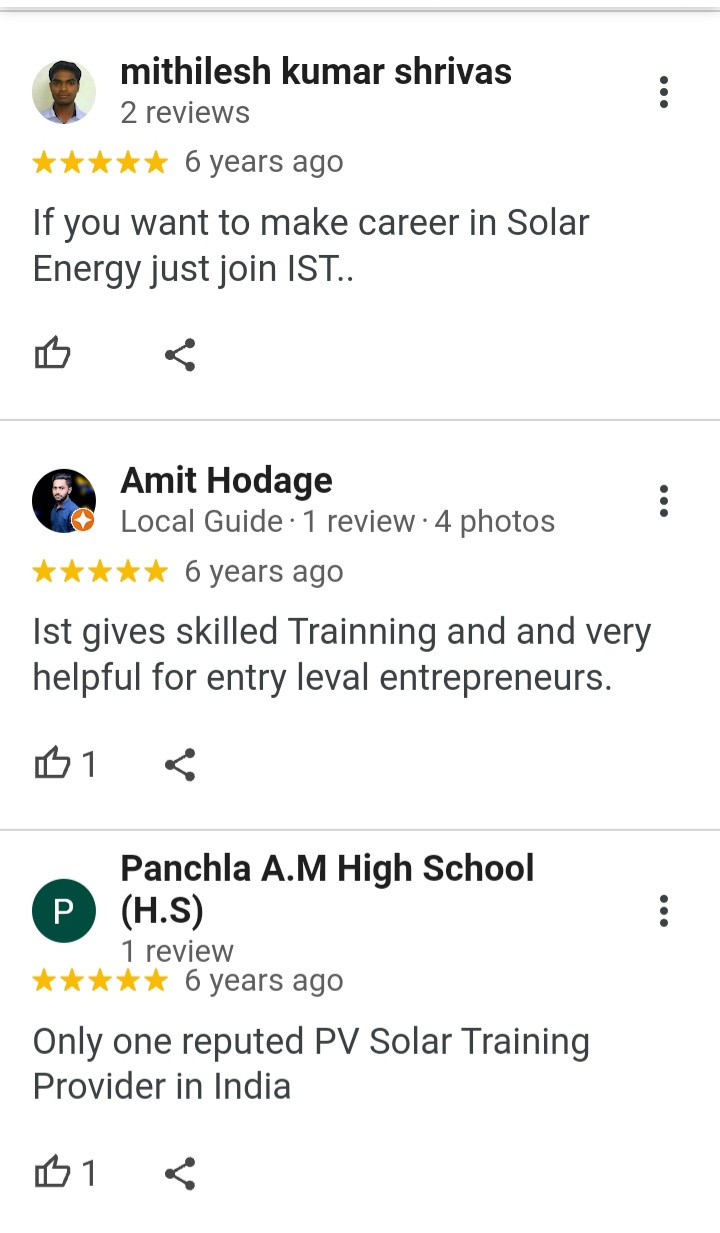
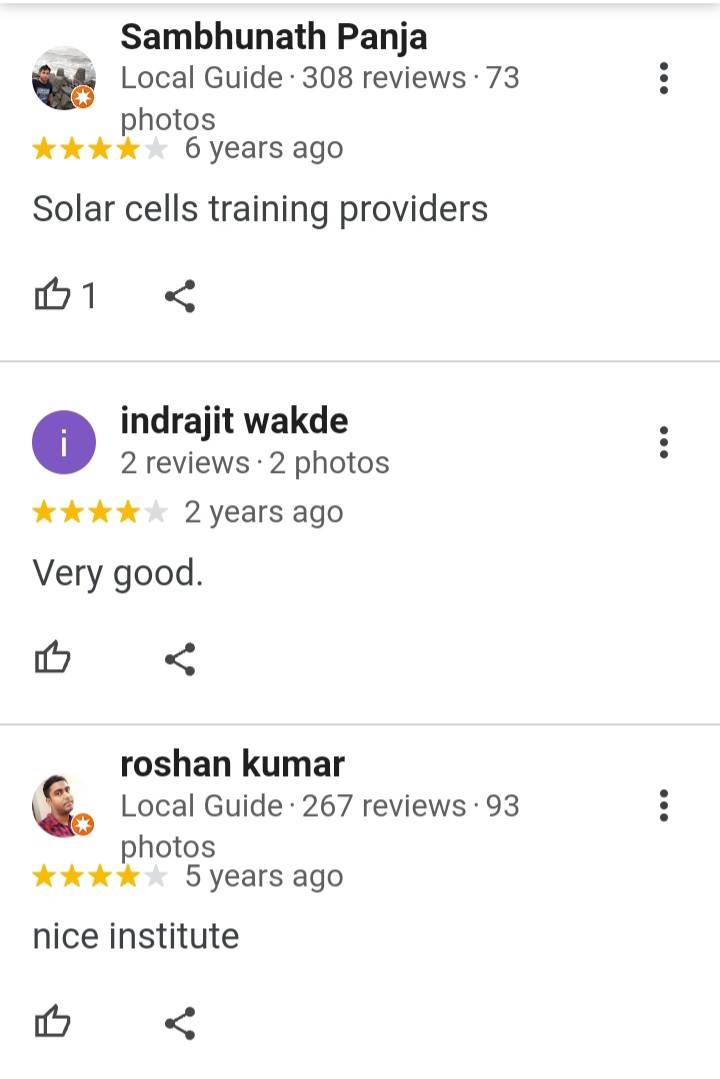
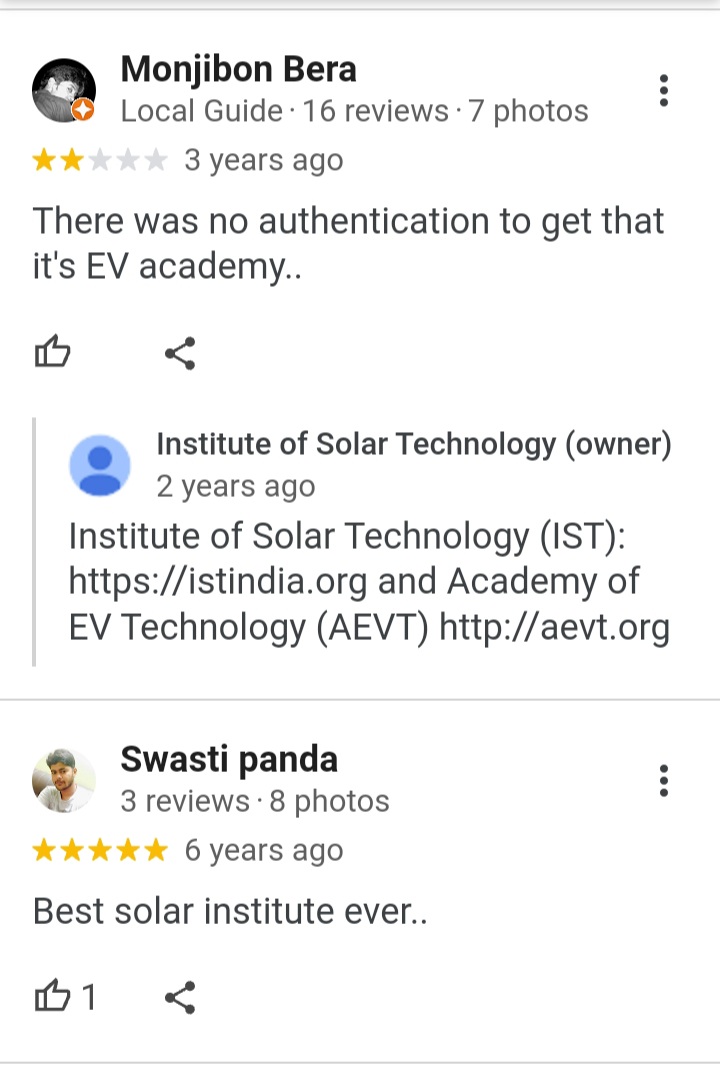
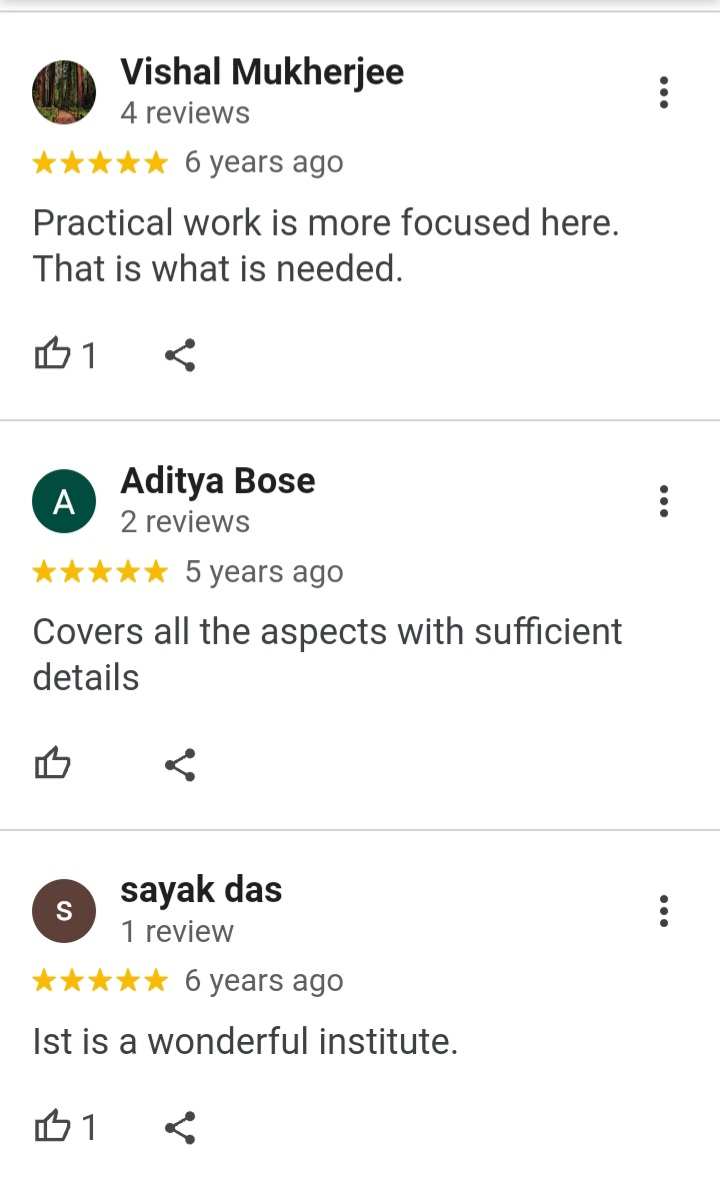
Here's a more detailed look at what makes IST stand out:
Practical Training:
IST focuses on providing practical, hands-on training in the solar sector. This includes training on the latest products and technologies used in solar installations.
Industry-Standard Syllabus:
The institute uses an industry-standard syllabus, ensuring that students are equipped with the knowledge and skills needed for the solar industry.
Expert Faculty:
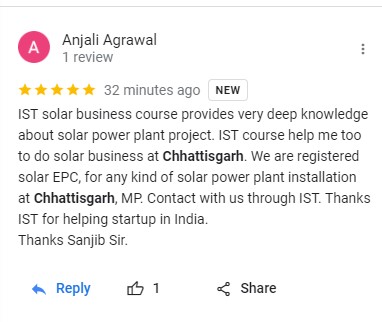
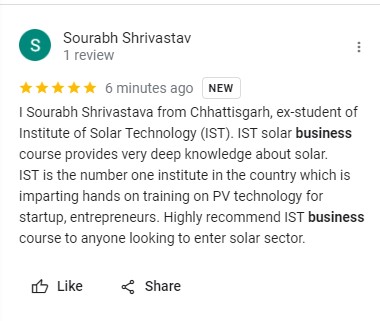
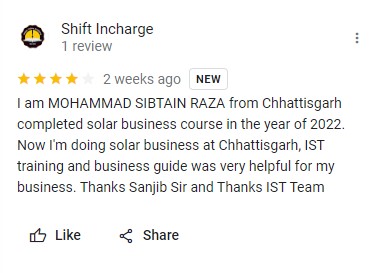
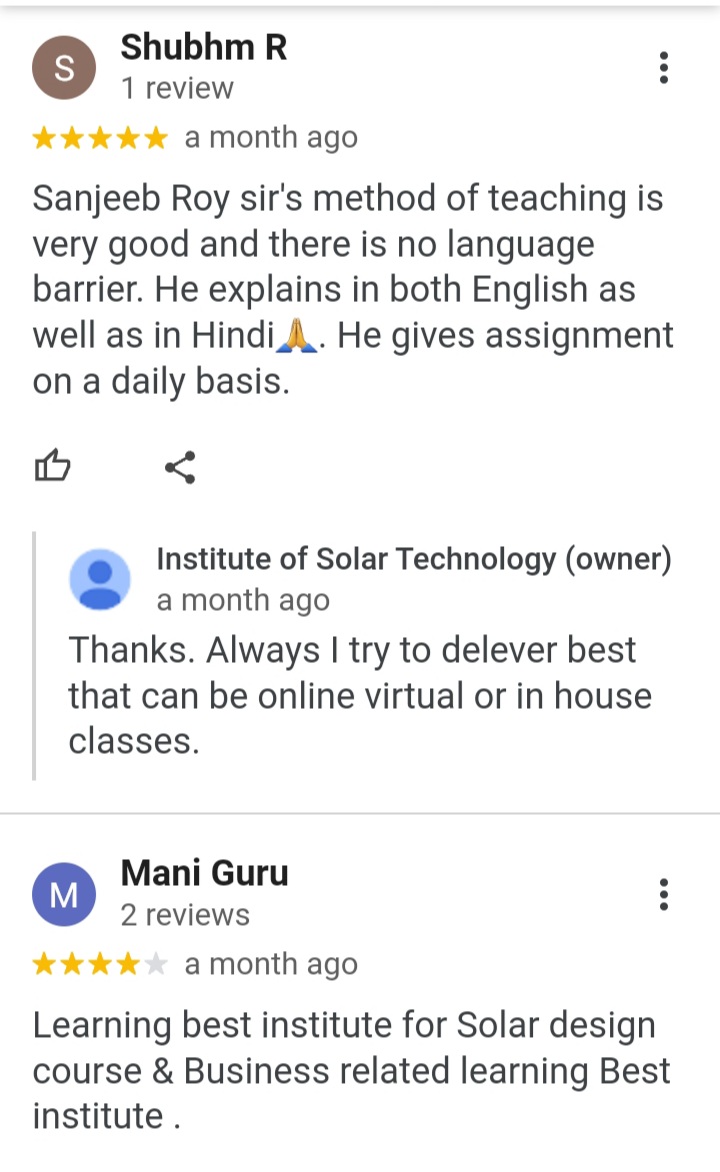
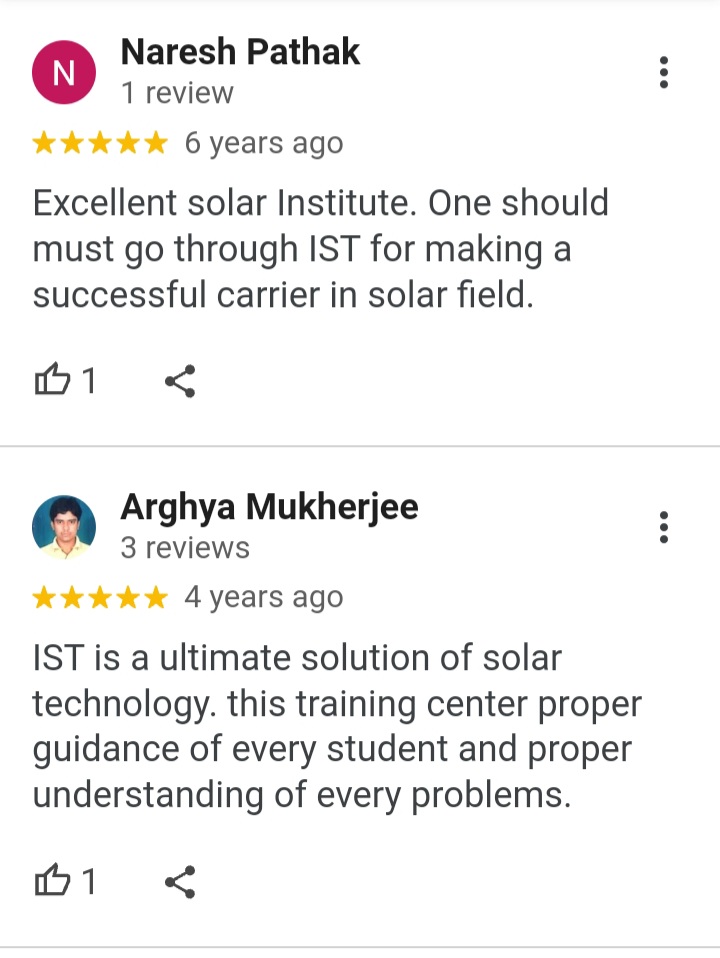
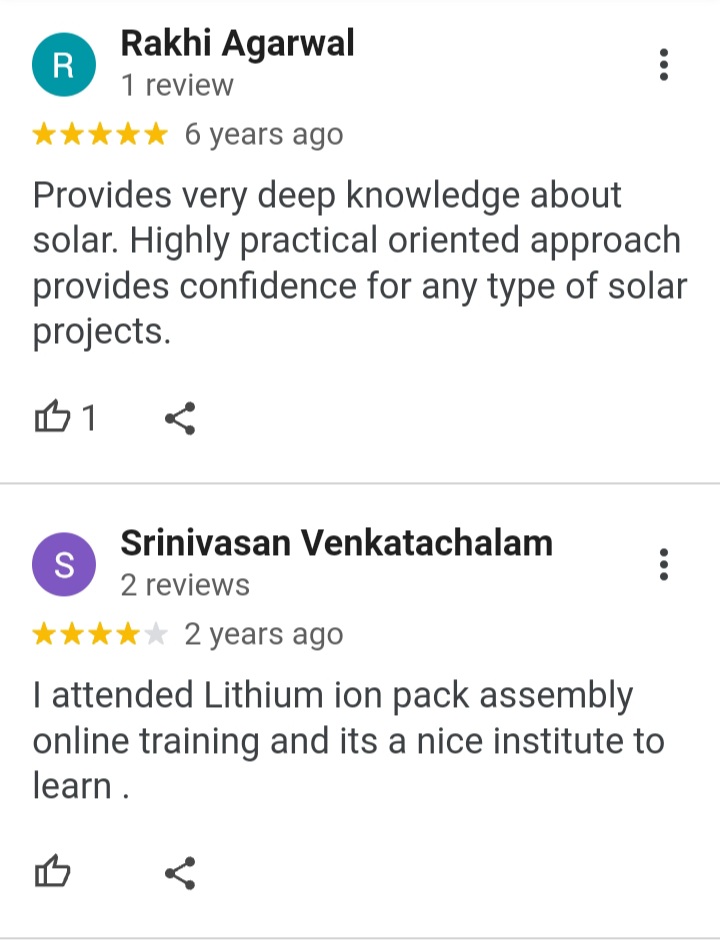
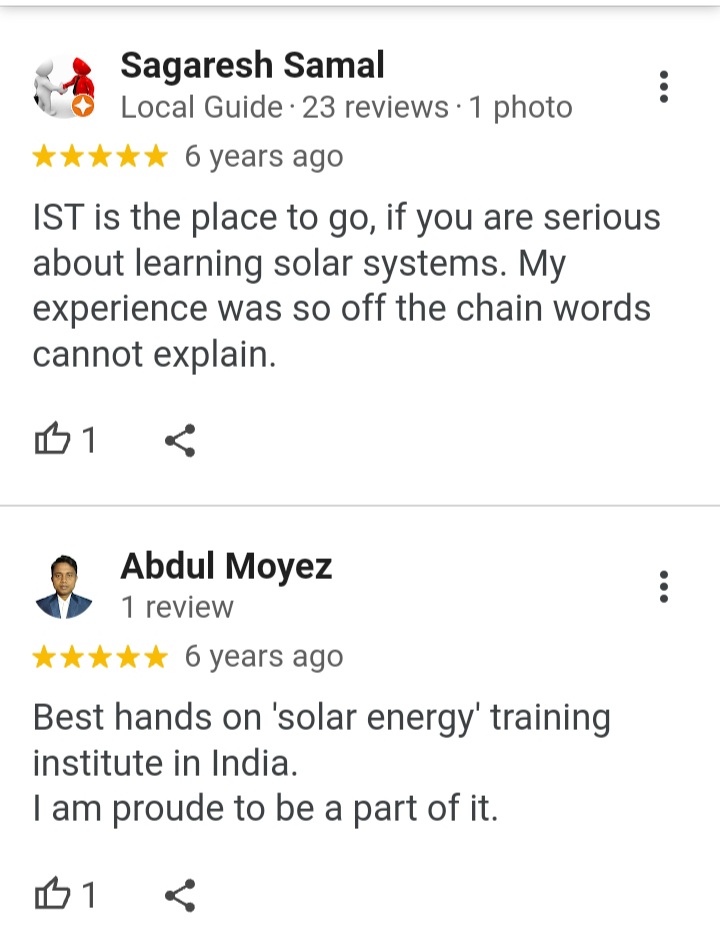
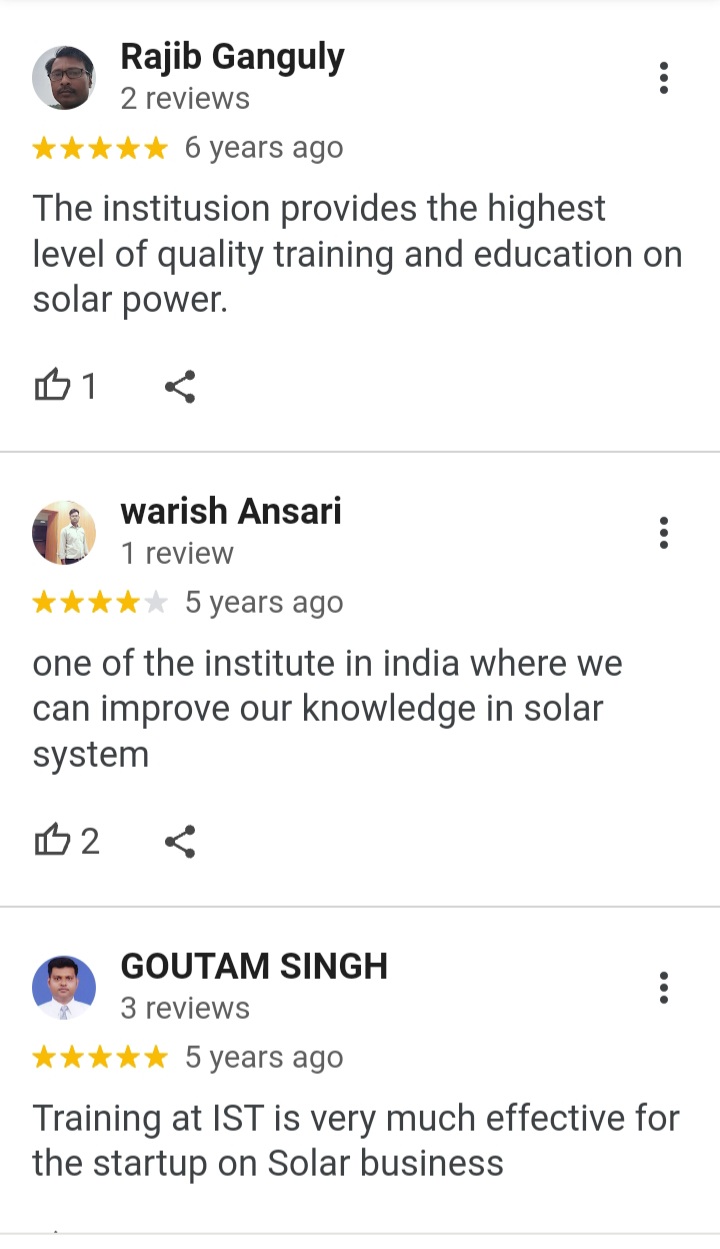
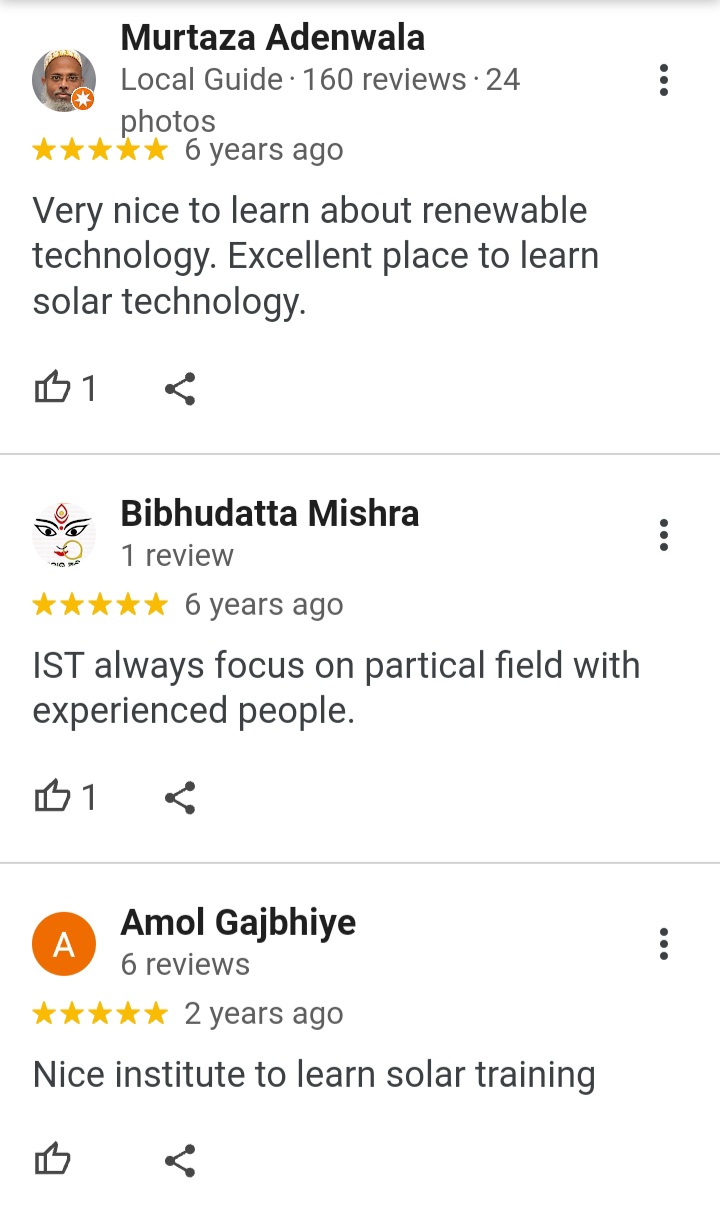
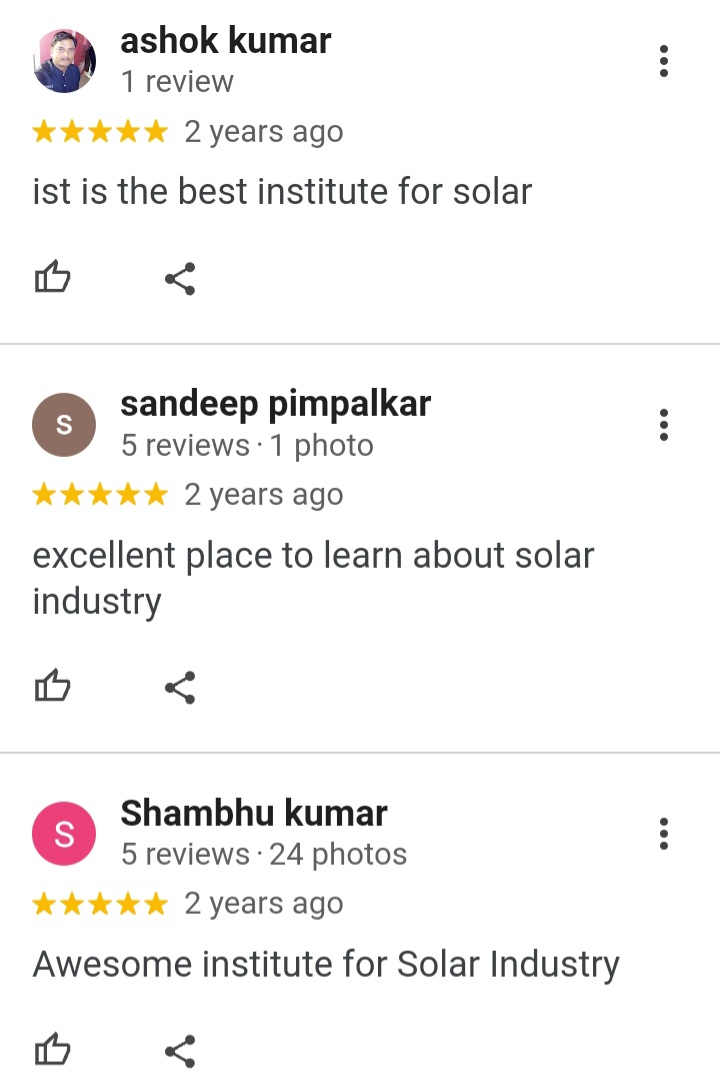
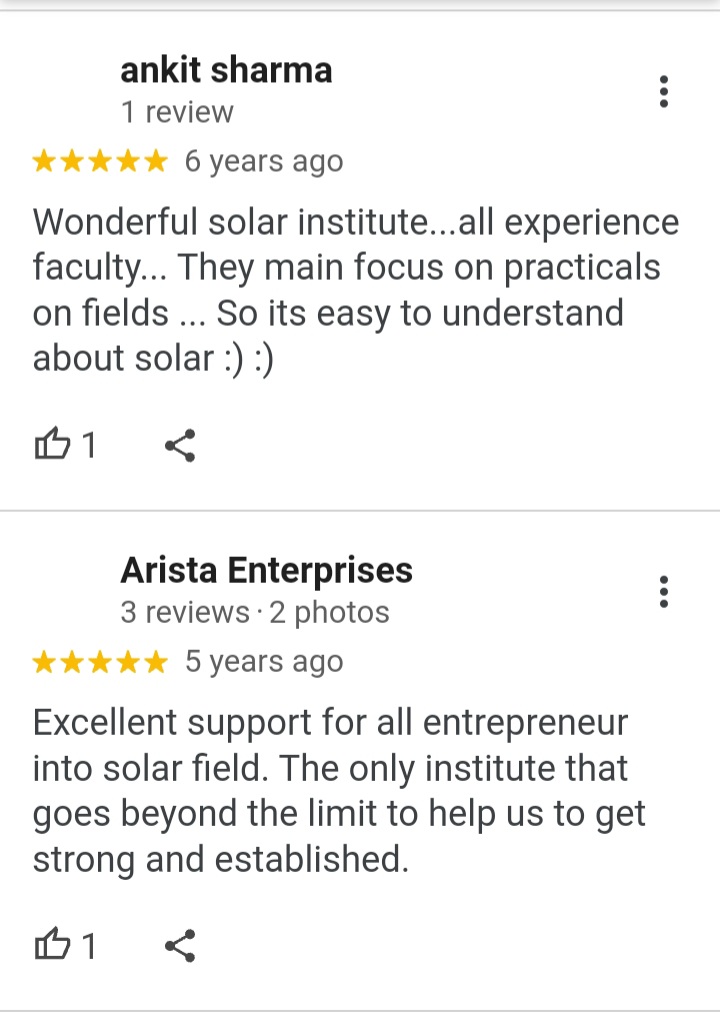
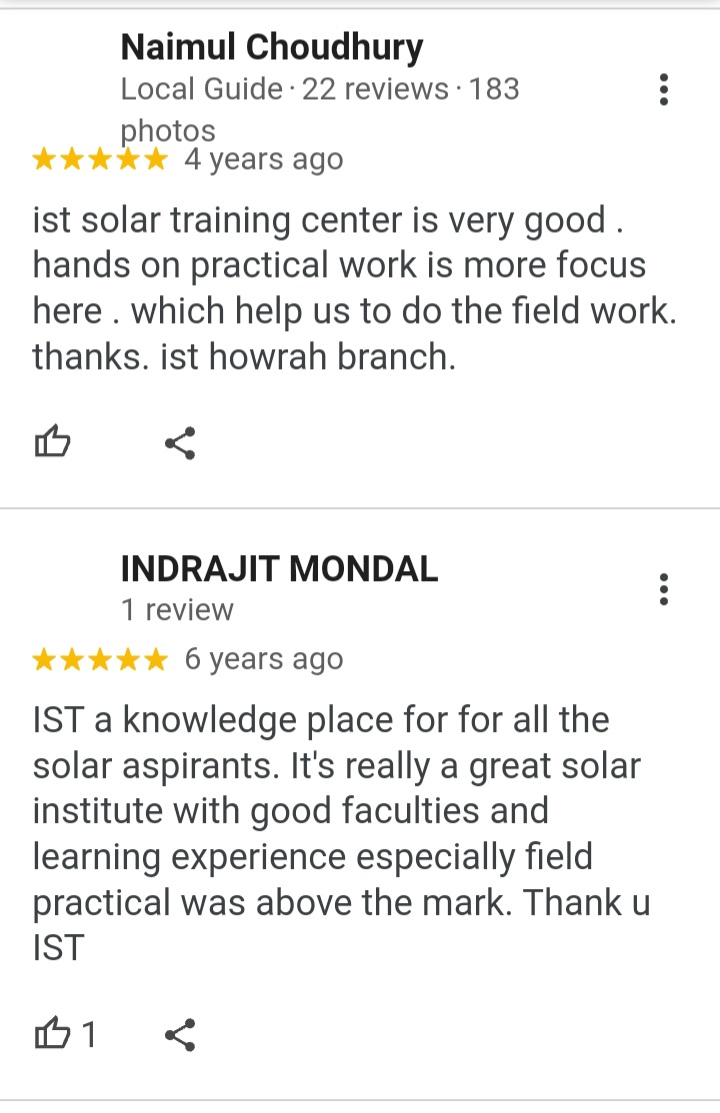
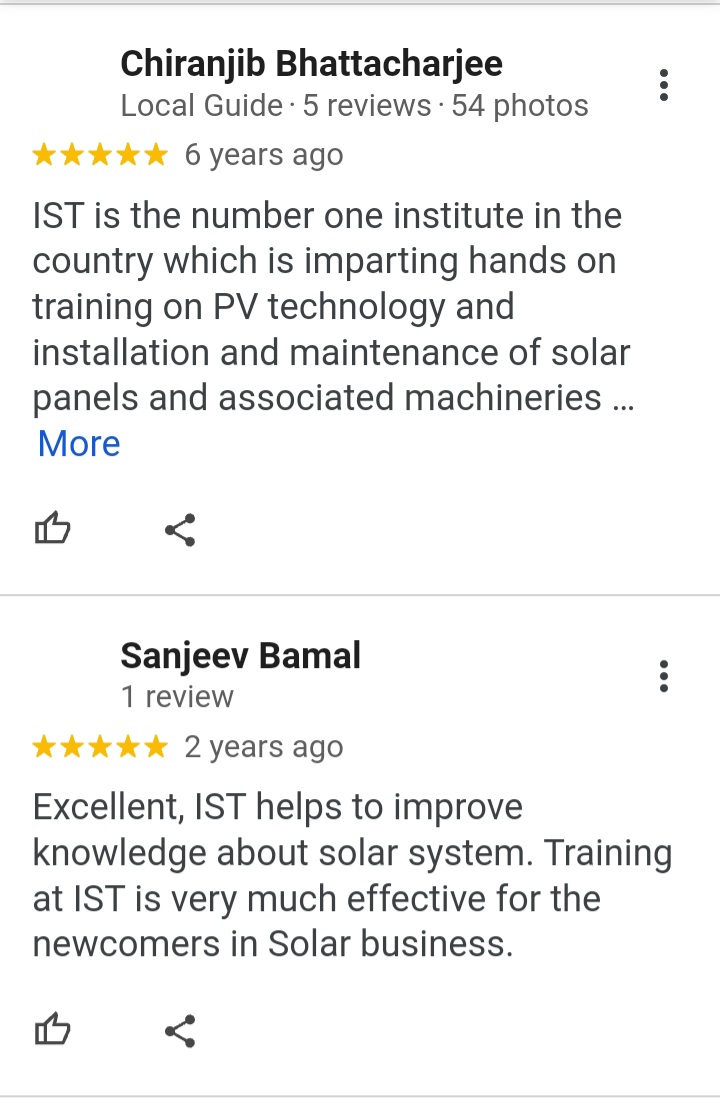
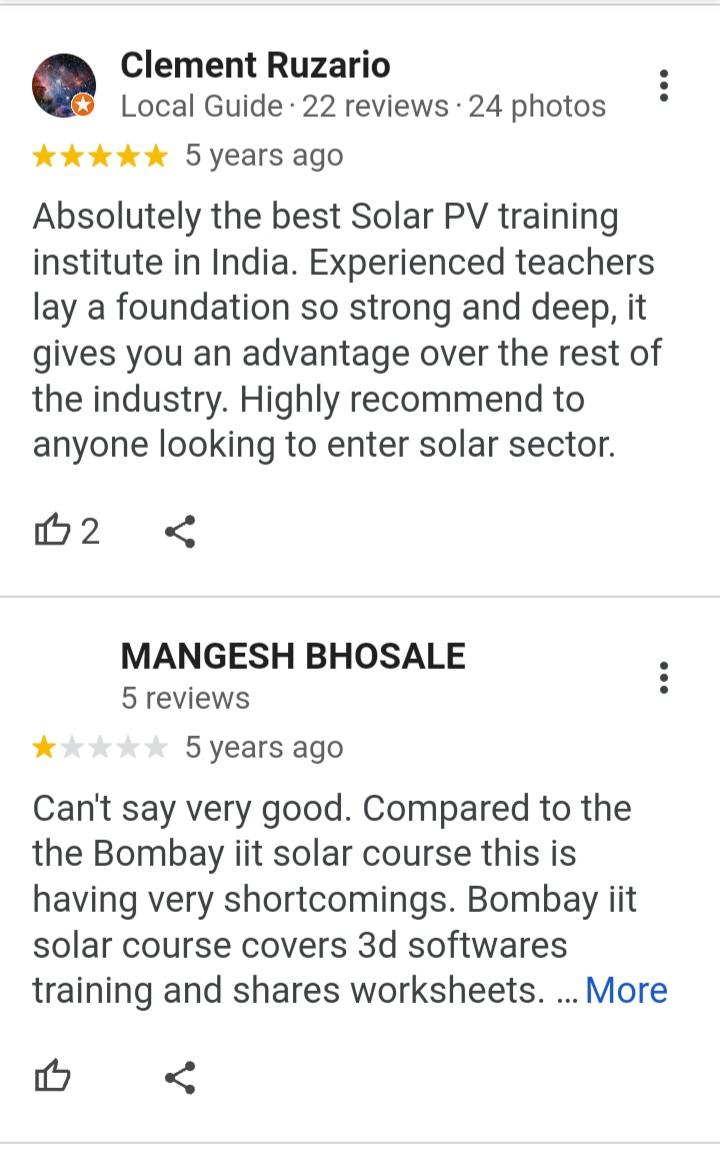
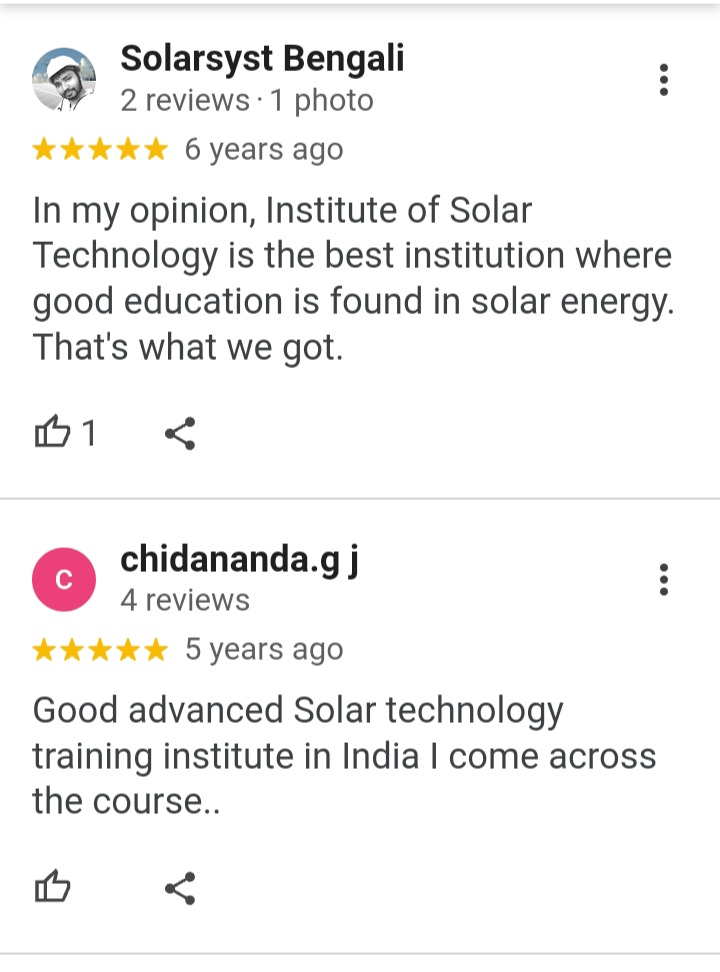
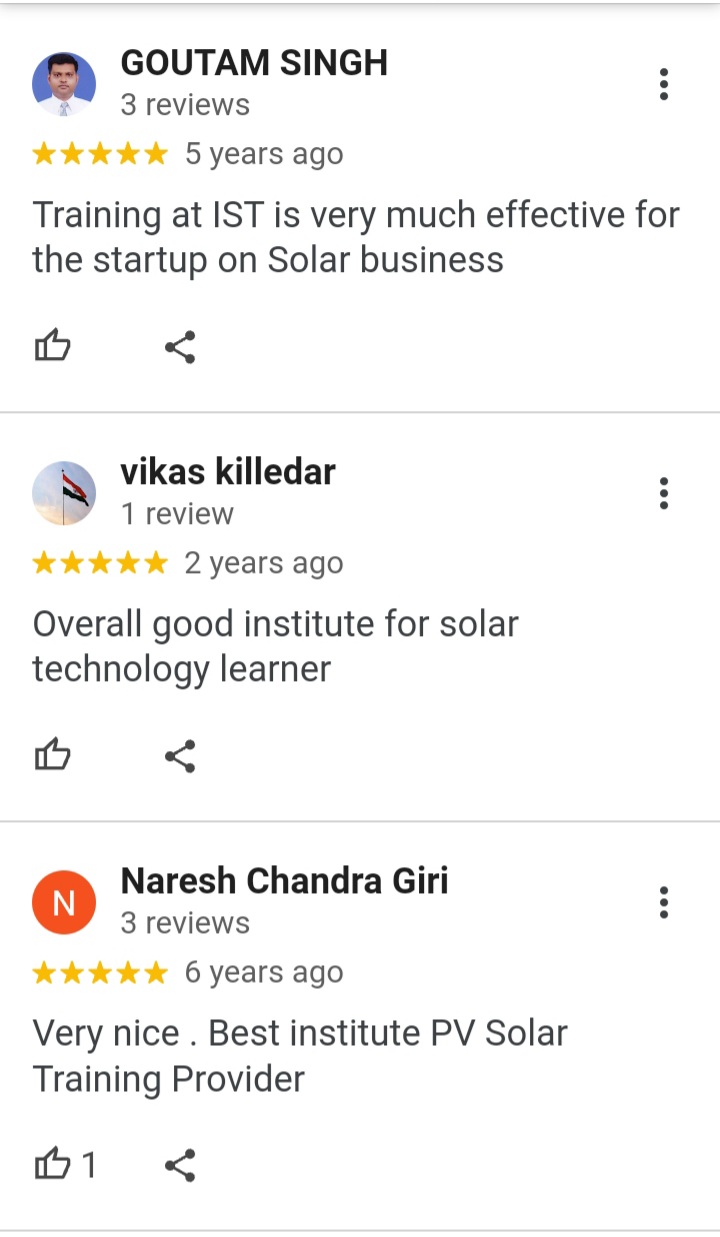
Reviewers praise the quality of instructors and the ease with which complex topics are explained, according to the Institute of Solar Technology Advisors.
Focus on Entrepreneurship:
IST aims to empower students to become solar entrepreneurs, providing them with the knowledge and skills to start their own businesses in the solar field
Support and Resources:
IST provides resources like an e-library and round-the-clock support, fostering self-learning and development.
Alumni Success:
IST boasts a network of successful alumni who have made notable contributions to the solar industry.
Pioneer in PV Solar Technology:
IST is recognized as a leader in PV solar technology training and has been an academic partner with the national and international University
Quick Inquiry Form
Admission Going on for
PV Technology and Business Management - Techno Commercial Training (Online)
Today's FLAT Discount 10% From:
1st Week of Nov - 2026

Course Duration: 2 + 1 Months
Submit Registration (Online Course)Solar Project Design Master Course (Online)
Today's FLAT Discount 10% From:
1st Week of Nov - 2026
Course Duration: 2 + 1 Months
Submit Registration (Online Course)Solar Power EV Charging Station Development (Online)
Today's FLAT Discount 10% From:
1st Week of Nov - 2026
Course Duration: 2 + 1 Months
Submit Registration (Online Course)Li-ion Battery Pack Assembly (Online)
Today's FLAT Discount 10% From:
1st Week of Nov - 2026
Course Duration: 2 + 1 Months
Submit Registration (Online Course)

Visit our Google Map




EMR aims to guide, encourage, and uphold the highest quality standards of professionalism ...
Subscribe here to get interesting stuff and updates!
Subscribe here

View all Job 2025




























Interactive Classes

Practical & Doubt Classes

E-Library Study Materials

Online Examination