Search IST Courses
Find PV Solar and Lithium-ion Battery course near by you
Similar Search results: SSEG At South Africa Registration
Similarity search results are visible in the form of an analysis of saved visitor search keywords and a Google Console update. Search result listed bellow. To know more, go to Home Page
Institute of Solar Technology (IST) an autonomous body for startups in solar energy training, have a milestone with 12 years of experience in Entrepreneurship Business Development, a long history of operation. Institute was founded in 2012, Indian oldest institute. To know more look "About Us" section.
solar, are ideal for meeting Africa’s electrical power needs
The current energy mix in Africa is based mostly on burning coal, oil, and traditional biomass (wood, charcoal, dry dung fuel). This reflects the energy resources of the continent, but also the use of technologies of the past. While this energy mix is comparatively cheap, it is insufficient to meet current needs, and negative effects on the environment are left unaddressed.
The right energy mix will allow Africa to develop rapidly while respecting the emission levels required under the 2015 Paris Agreement. Prices for renewable energy have fallen substantially in the past few years, especially for solar power, whose cost decreased 77 percent between 2010 and 2018. African governments can generate significant revenue by reducing the inefficiency caused by fossil fuel subsidies, African governments can potentially mobilize more of their domestic resources to cover the initial capital costs of renewable energy.
Tunisia
Southern Tunisia is the ideal location for solar energy generation and has an average solar radiation potential of 1800-2600 m2 per year. The country has a target of generating 30% of its electricity from renewable energy sources by 2030 and solar energy plays an important role in this plan.
Algeria
Algeria has excellent solar resources of over 2,000 kWh/m2/yr direct sunlight. Ministry is targeting the installation of 22 GW of renewable energy by 2030, of which 4.5 GW would be connected by 2020.
Egypt
Egypt lies within the Sun Belt area, where DNI ranges between 2,000 kWh/m2/yr in the north and 3,200 kWh/m2/yr in the south.
Conclusion
India needs to explore more avenues to advance its engagement with the African region. Amid the global turn towards sustainable and green solutions to combat and mitigate climate change impacts, India and Africa can consider partnering on emerging related issues, particularly energy security.
Professional PV engineering shouldn't cost more than the project margin
IST PVSolar Simulator puts bankable solar design and simulation in a web browser, at a cost that small EPCs and independent engineers in Bangladesh, Sri Lanka, Nepal and Pakistan can actually afford. It brings together yield simulation, electrical design, SLD, BOQ, quotation and a P90 bankability report in one cloud platform.
For years, serious PV engineering has meant expensive desktop licences tied to one machine, separate tools for layout, shading and finance, and weeks of training before a new engineer is productive. Large firms absorb that cost. A 5-person rooftop EPC in Dhaka, Colombo, Kathmandu or Lahore usually cannot — and ends up quoting from spreadsheets and rules of thumb.
IST PVSolar Simulator was built to close that gap: the same engineering depth lenders expect, delivered as an affordable cloud service.
Affordable, not simplified
A lower price does not mean lighter physics. The engine inside IST PVSolar Simulator uses the same published models found in leading industry tools.| Country / Market | Currency | Price per year (MRP) |
| Bangladesh | Bangladeshi Taka (BDT) | ৳ 50,000 |
| Nepal | Nepalese Rupee (NPR) | ₨ 70,000 |
| Pakistan | Pakistani Rupee (PKR) | ₨ 138,000 |
| Sri Lanka | Sri Lankan Rupee (LKR) | ₨ 139,000 |
| India | Indian Rupee (INR) | ₹ 47,200 |
| UAE | UAE Dirham (AED) | د.إ 2,000 |
| Saudi Arabia | Saudi Riyal (SAR) | ﷼ 2,000 |
| Thailand | Thai Baht (THB) | ฿ 15,000 |
| Malaysia | Malaysian Ringgit (MYR) | RM 2,100 |
| Philippines | Philippine Peso (PHP) | ₱ 27,000 |
| Indonesia | Indonesian Rupiah (IDR) | Rp 7,210,190 |
| South Africa | South African Rand (ZAR) | R 6,038 |
| Nigeria | Nigerian Naira (NGN) | ₦ 499,100 |
| Eurozone | Euro (EUR)€ 450 | |
| United Kingdom | British Pound (GBP)£ 400 | |
| Switzerland | Swiss Franc (CHF) | CHF 420 |
| USA & international | US Dollar (USD) | $ 500 |
| Canada | Canadian Dollar (CAD) | C$ 710 |
| Brazil | Brazilian Real (BRL) | R$ 2,460 |
| Australia | Australian Dollar (AUD) | A$ 710 |
India → Asia → Middle East → Africa → Europe → Americas
One Cloud Platform for Solar PV Design, Simulation, Electrical Engineering & Bankability.
Partner with us in your country
We are appointing local partners across the region. Pakistan and Bangladesh are open for Country Master Sellers, who lead the national seller network and key accounts. In Sri Lanka and Nepal, and in all four countries, we welcome Professional Sellers, Training Partners and EPC Partners.
To start, visit istpvsolarsimulator.com and request a live demo. We will show you a complete project from site assessment to P90 bankability report, at the local-currency price listed above.
IST PVSolar Simulator — professional solar engineering.
Small-Scale Embedded Generation (SSEG) refers to customer-owned power systems (like rooftop solar PV) under 1 Megawatt (MW) that connect and operate parallel to the main electricity grid, allowing energy to flow both ways (consumption and potentially selling surplus back). Primarily used in South Africa, SSEG aims to reduce electricity costs, lower emissions, and provide backup power (with batteries) during grid outages, requiring registration and compliance with strict technical standards for safety and grid stability.
Key Business Opportunities under SSEG
- Installation & Integration Services: Businesses can offer design, supply, and installation of solar PV systems (rooftop/ground-mount) for homes, businesses, and malls.
- Energy Storage Solutions: Integrating batteries (energy storage) with PV systems to provide backup power and optimize self-consumption.
- Maintenance & Operations (O&M): Offering ongoing maintenance, monitoring, and grid compliance services for installed systems.
- Consulting & Compliance: Helping businesses and homeowners navigate the complex registration, licensing, and grid connection processes.
How SSEG Reduces Your Bill
- Net Metering Credits: surplus electricity your system produces is automatically exported to the utility grid, you are billed only for the "net" consumption and this lead to significant cost savings, even bringing your bill close to zero.
- Protection from Tariff Hikes: By generating your own power, you are less affected by the rising grid electricity tariffs and price fluctuations that are expected to continue in comming years.
- Exemption from Registration Fees: registration fee exemptions (R9,132 for a typical household installation) of SSEG application, connection, and smart meter installation fees for residential customers with systems up to 50kVA until March 2026.
- Energy Export Compensation: Households with registered SSEG systems can receive credits on their electricity bills for surplus power exported to the grid.
- Business Deductions: While the specific 125% tax deduction for businesses
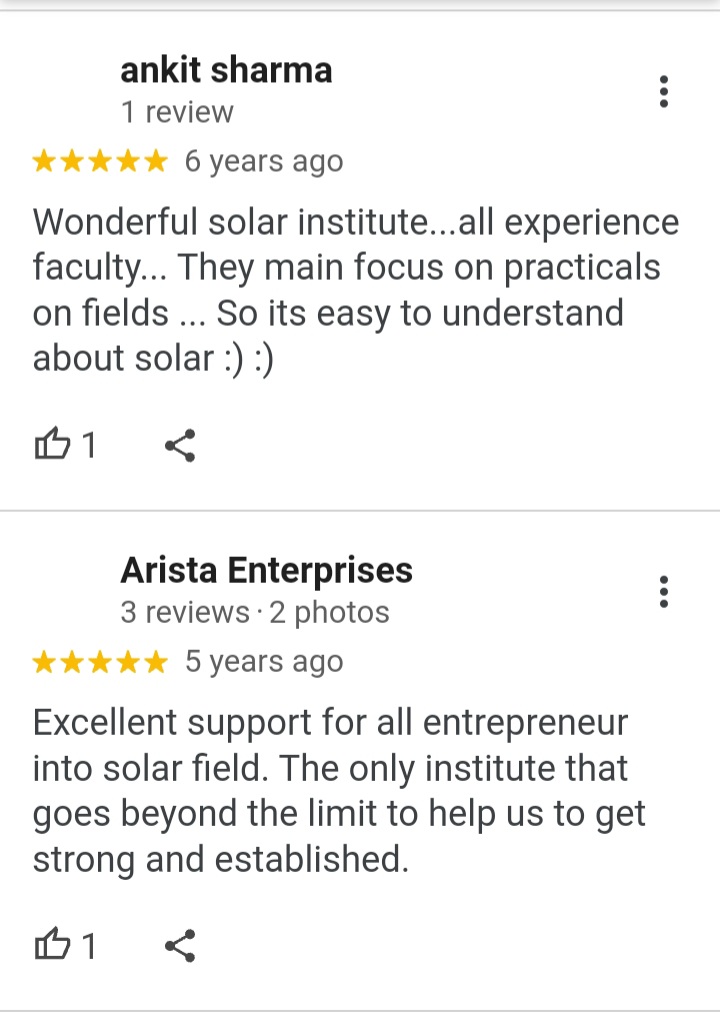
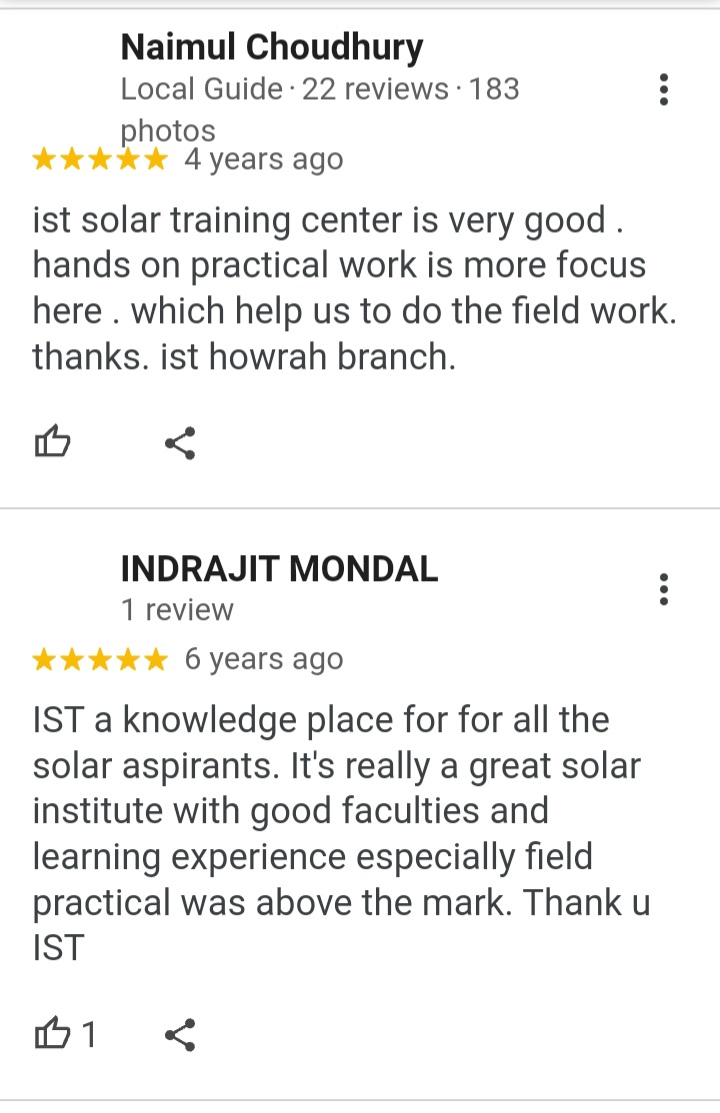
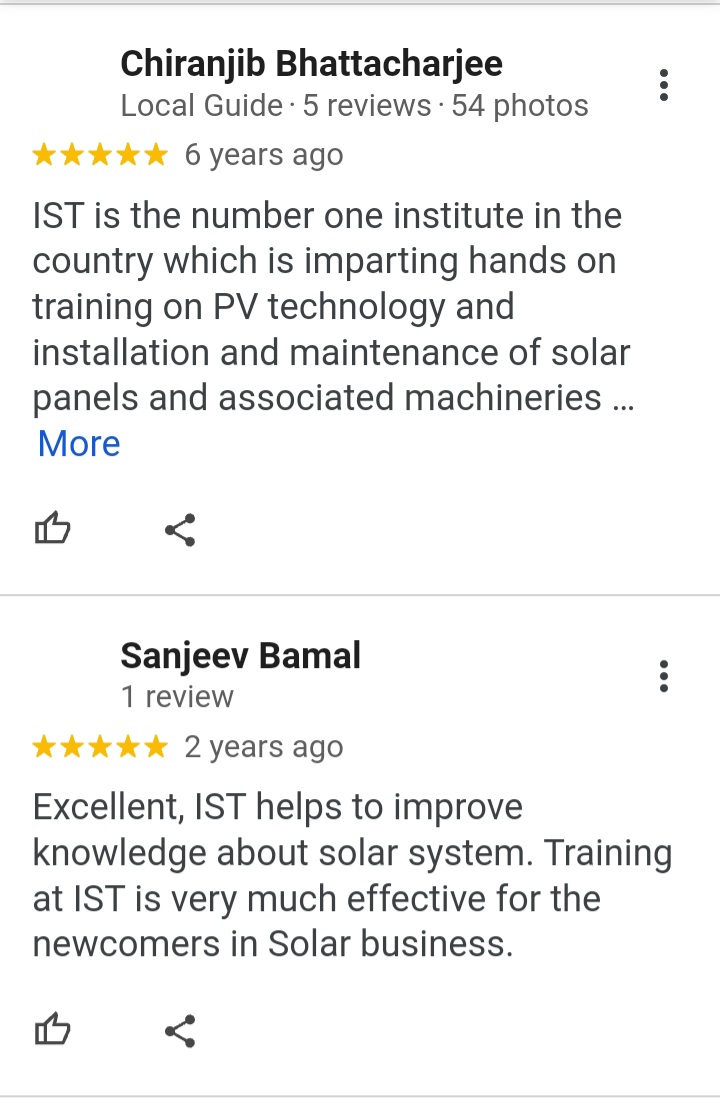
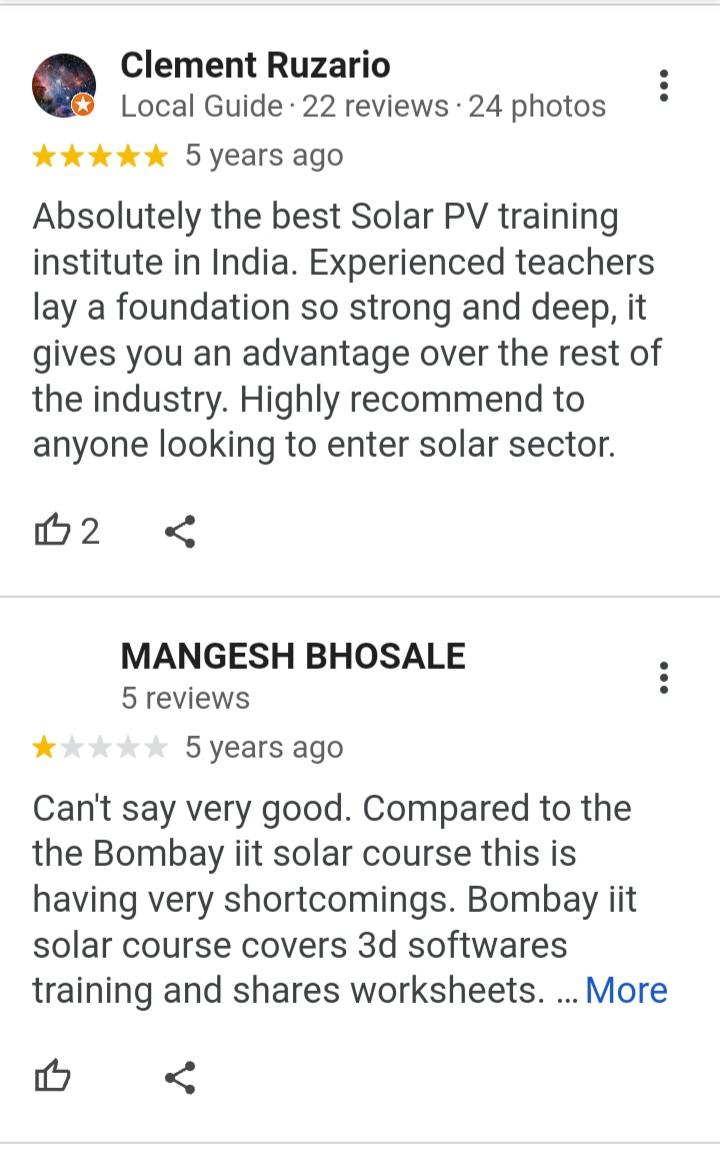
Here's a more detailed look at what makes IST stand out:
Practical Training:
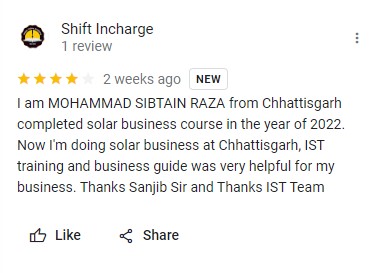
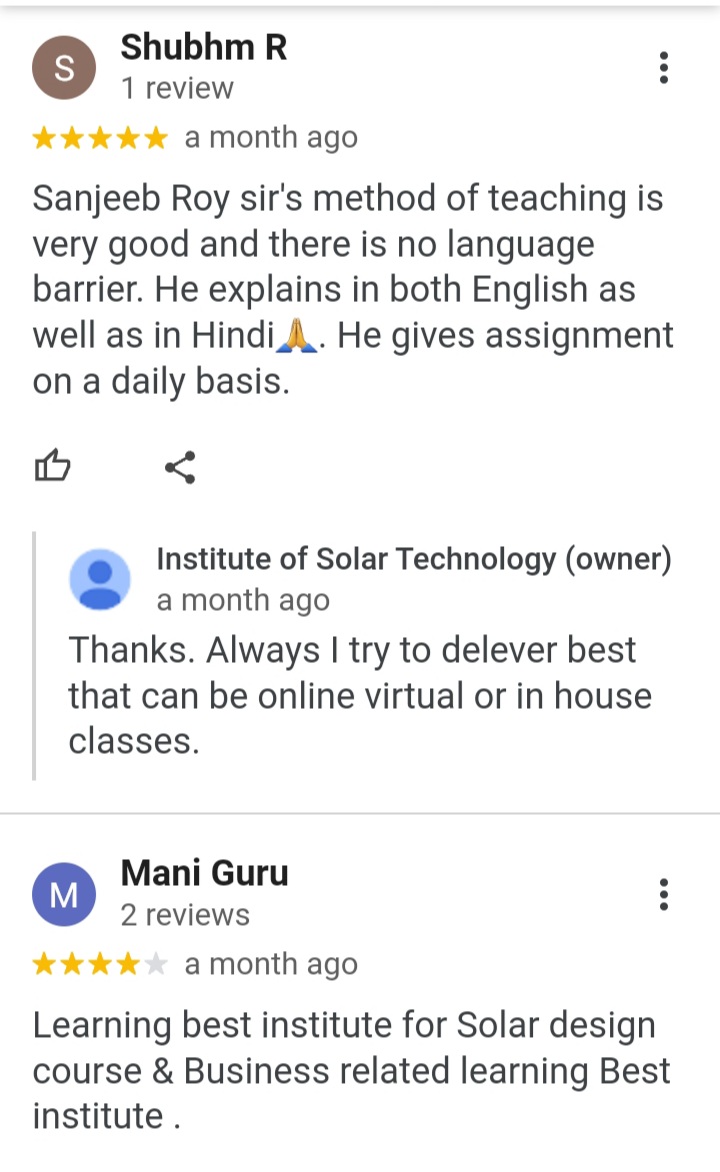
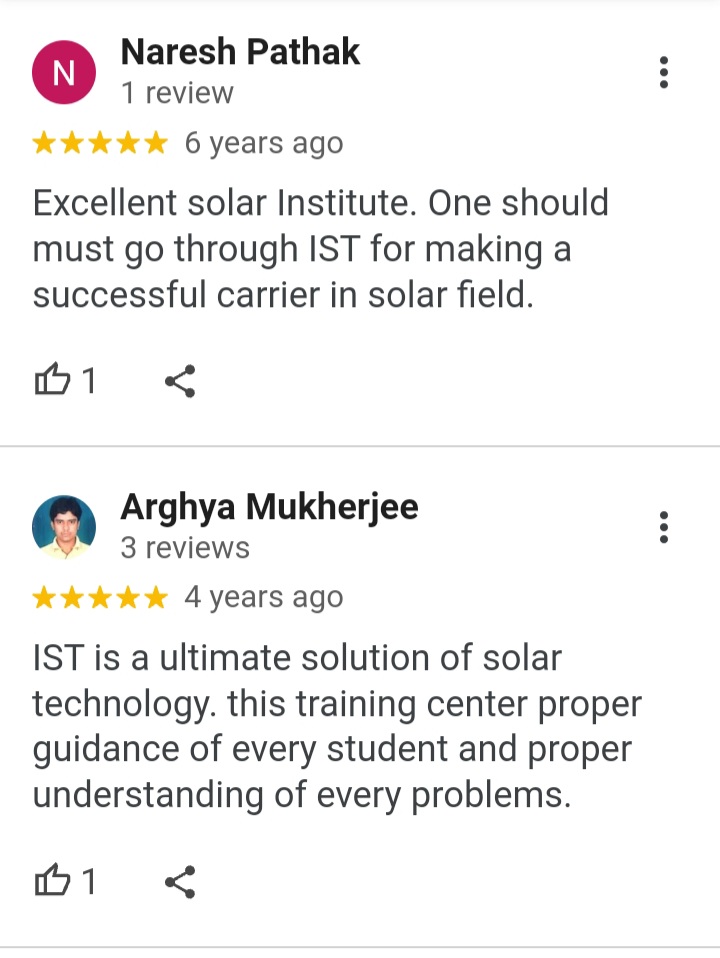
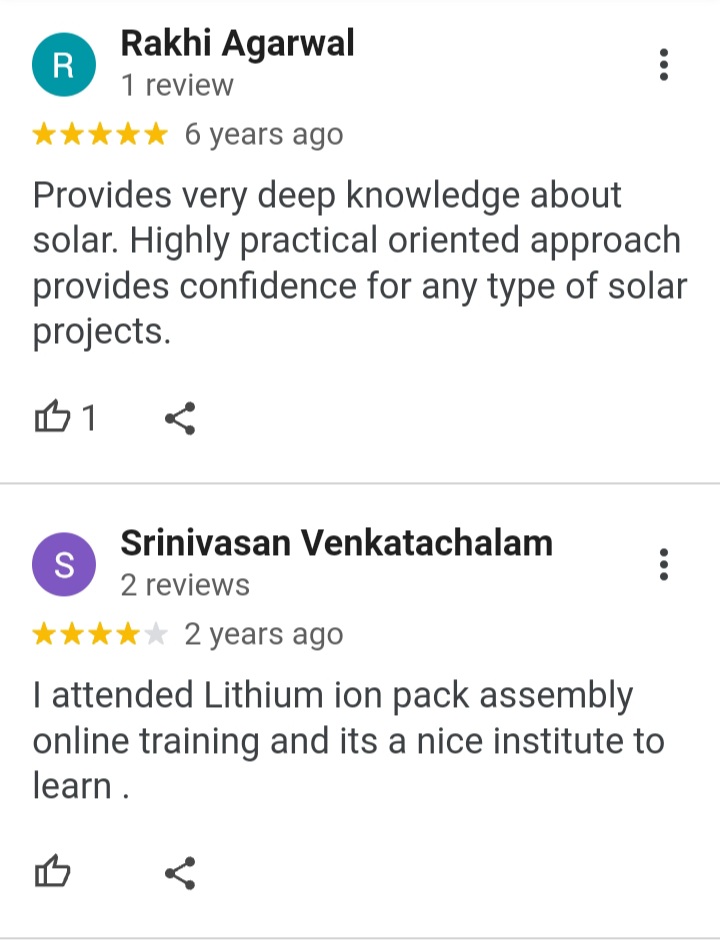
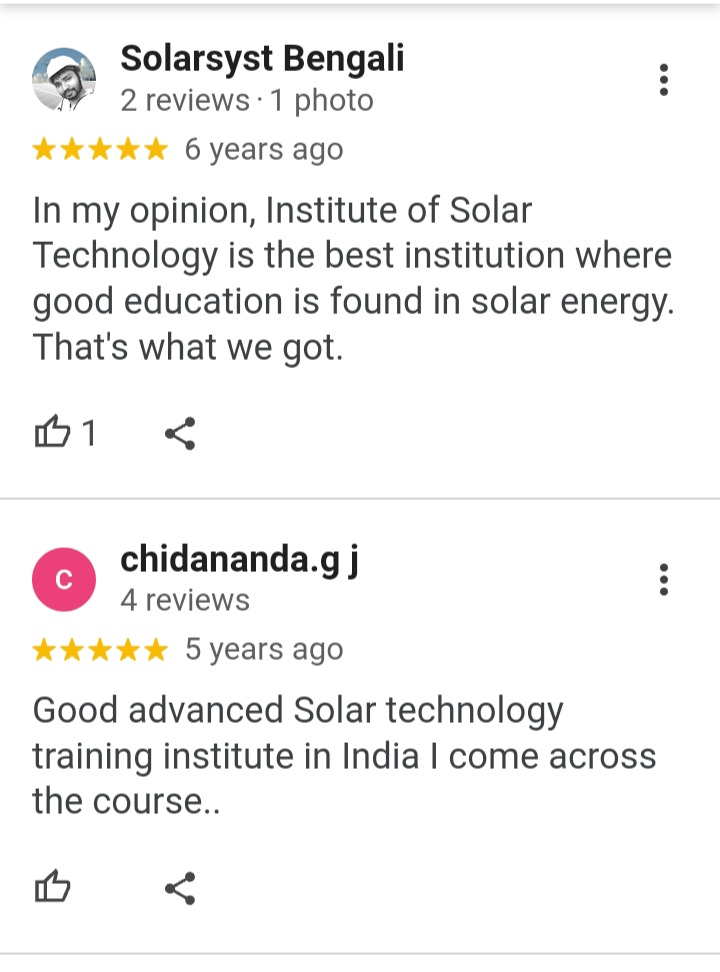
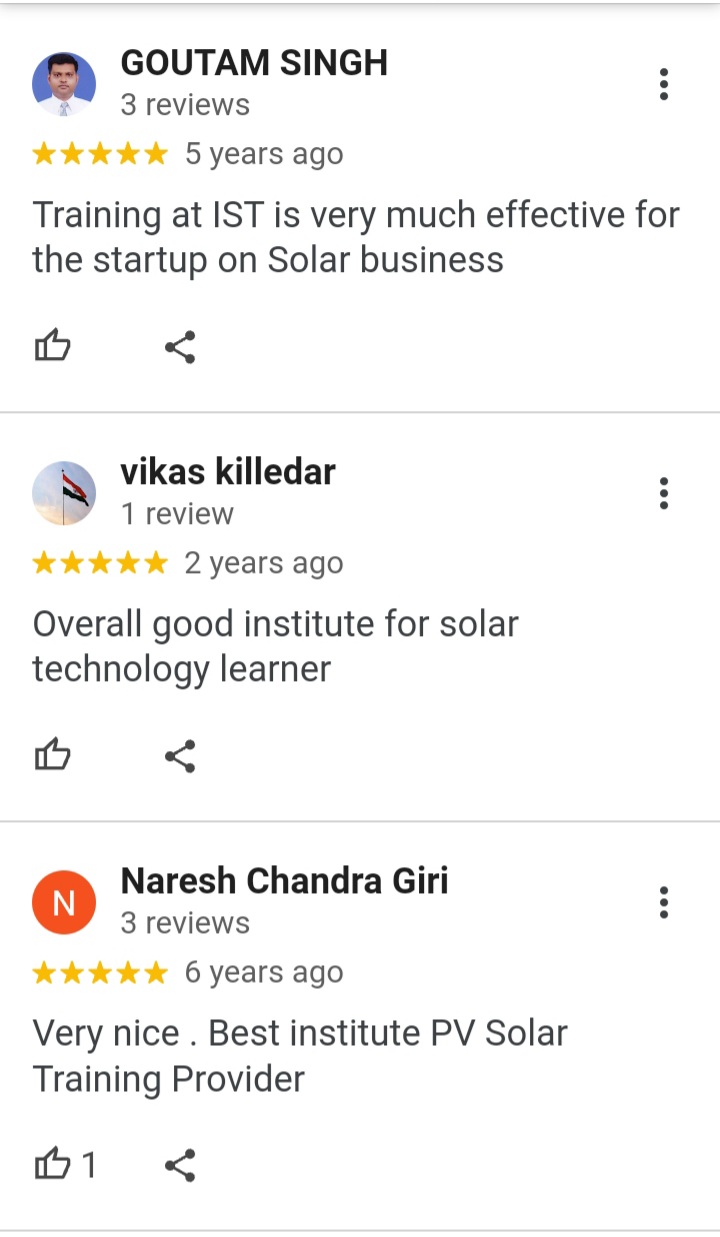
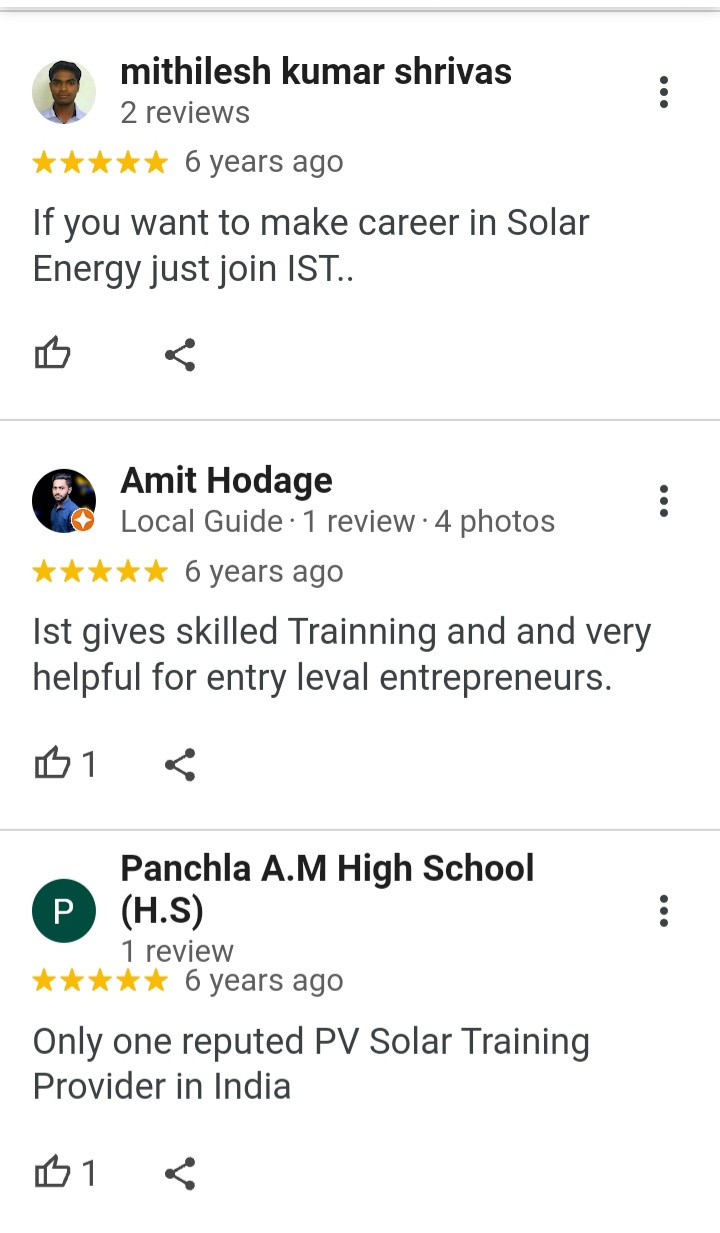
IST focuses on providing practical, hands-on training in the solar sector. This includes training on the latest products and technologies used in solar installations.
Industry-Standard Syllabus:
The institute uses an industry-standard syllabus, ensuring that students are equipped with the knowledge and skills needed for the solar industry.
Expert Faculty:
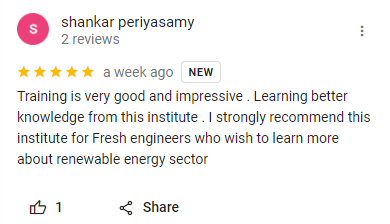
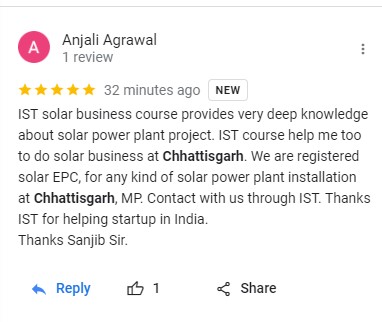
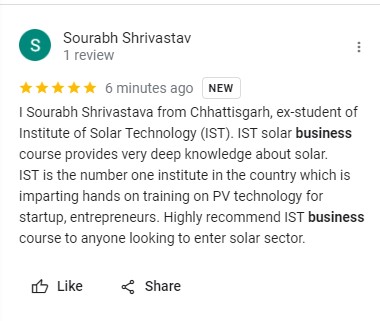
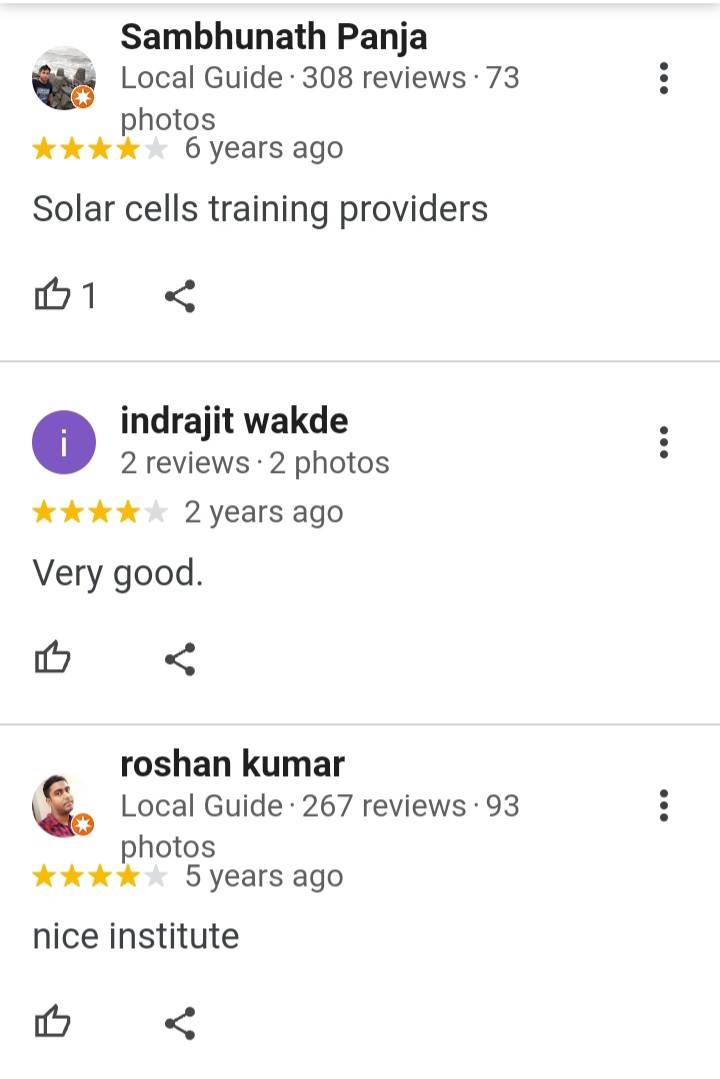
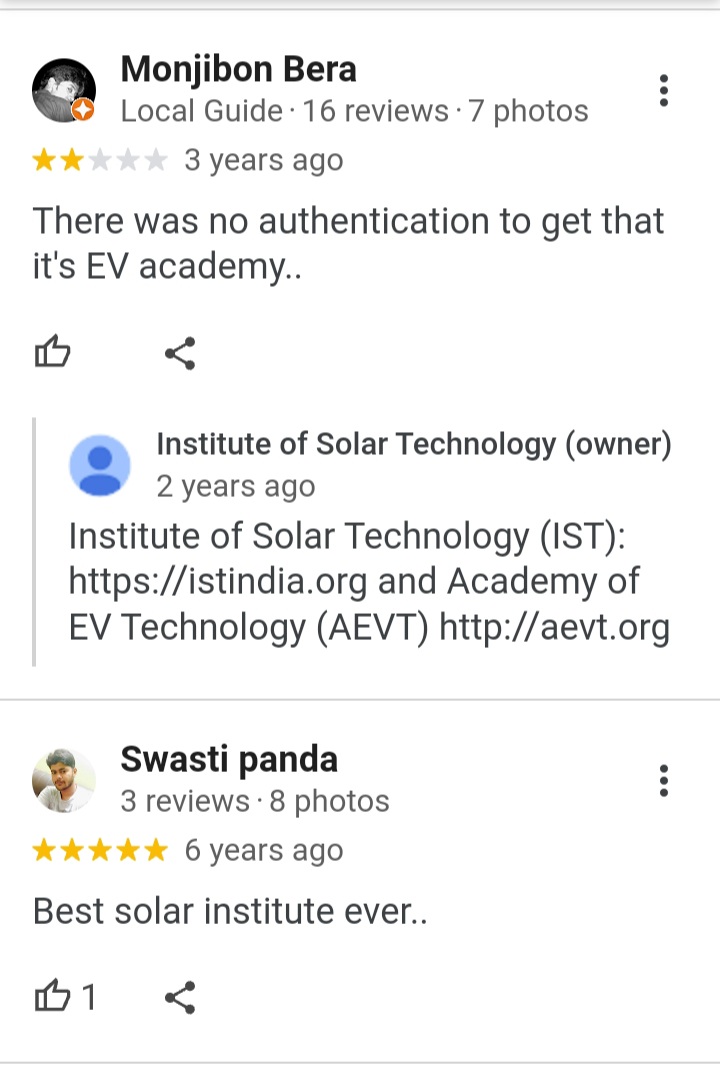
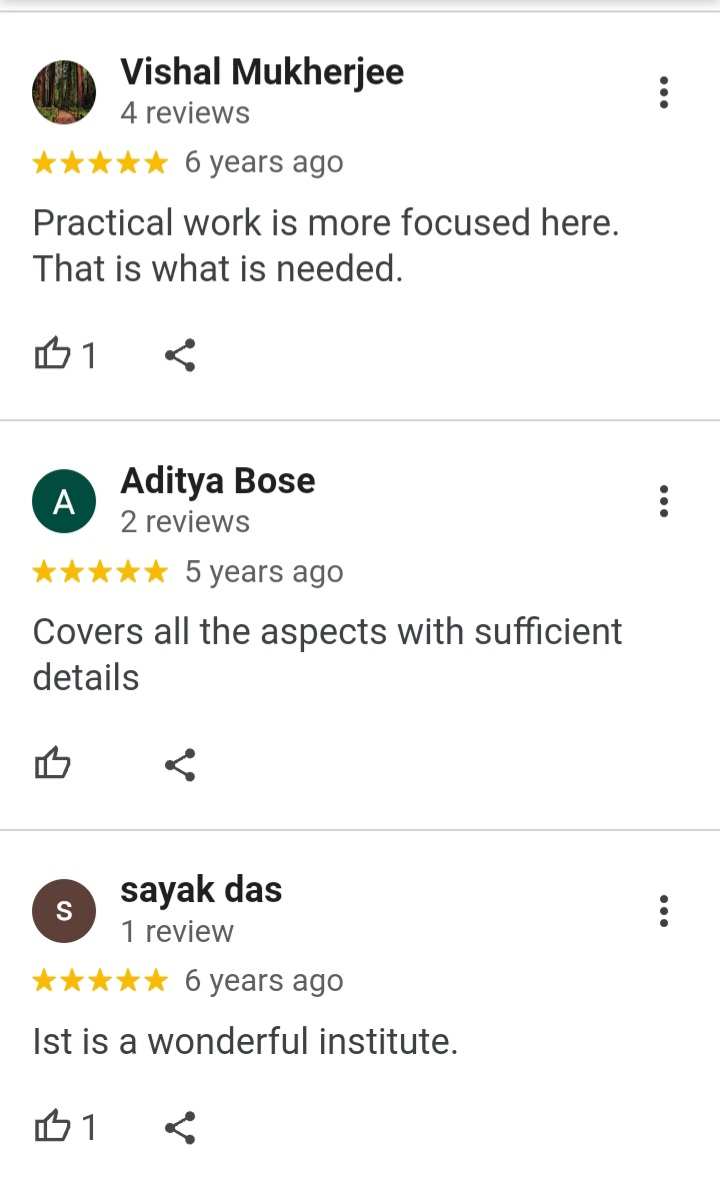
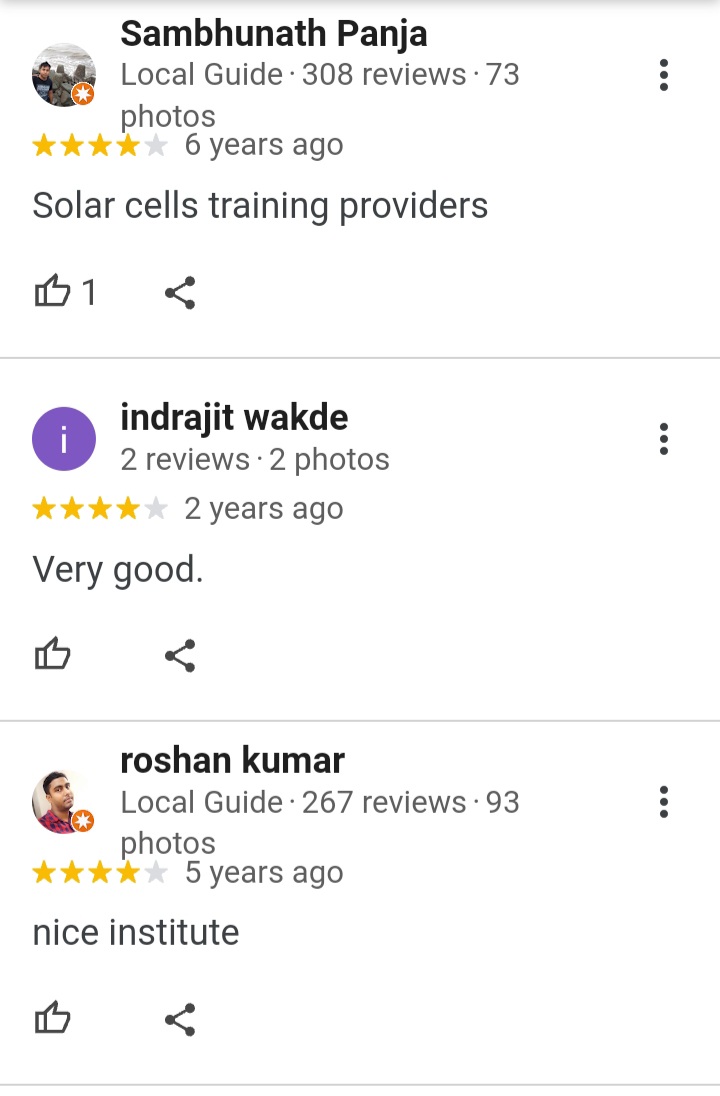
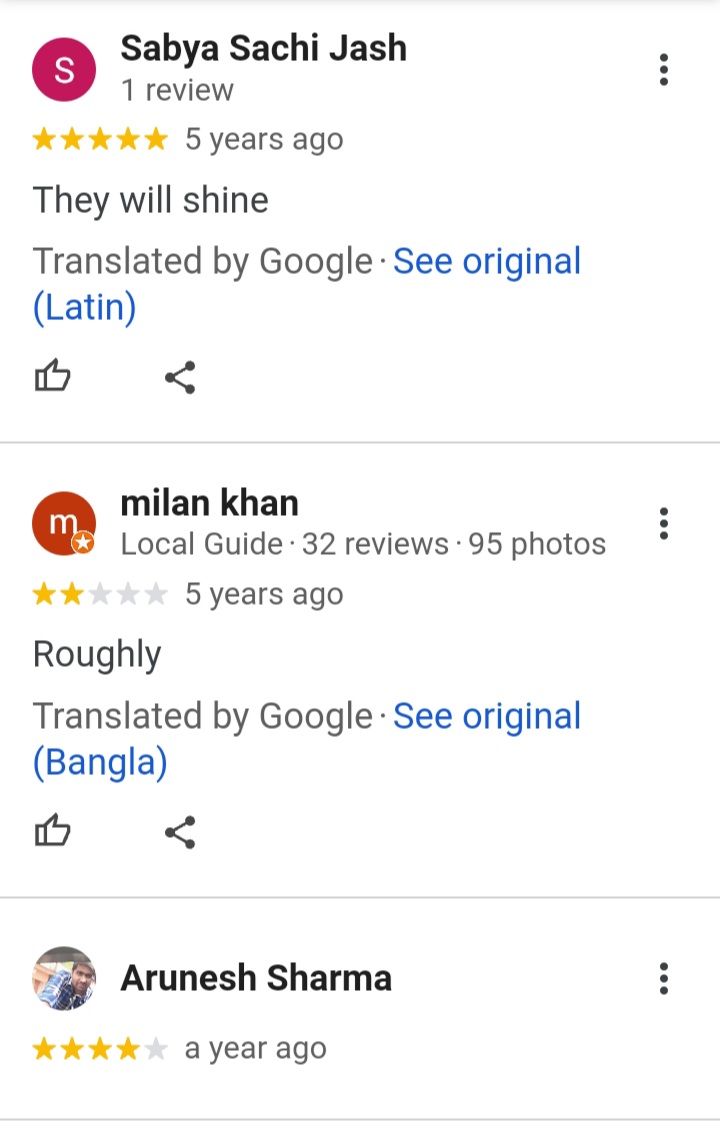
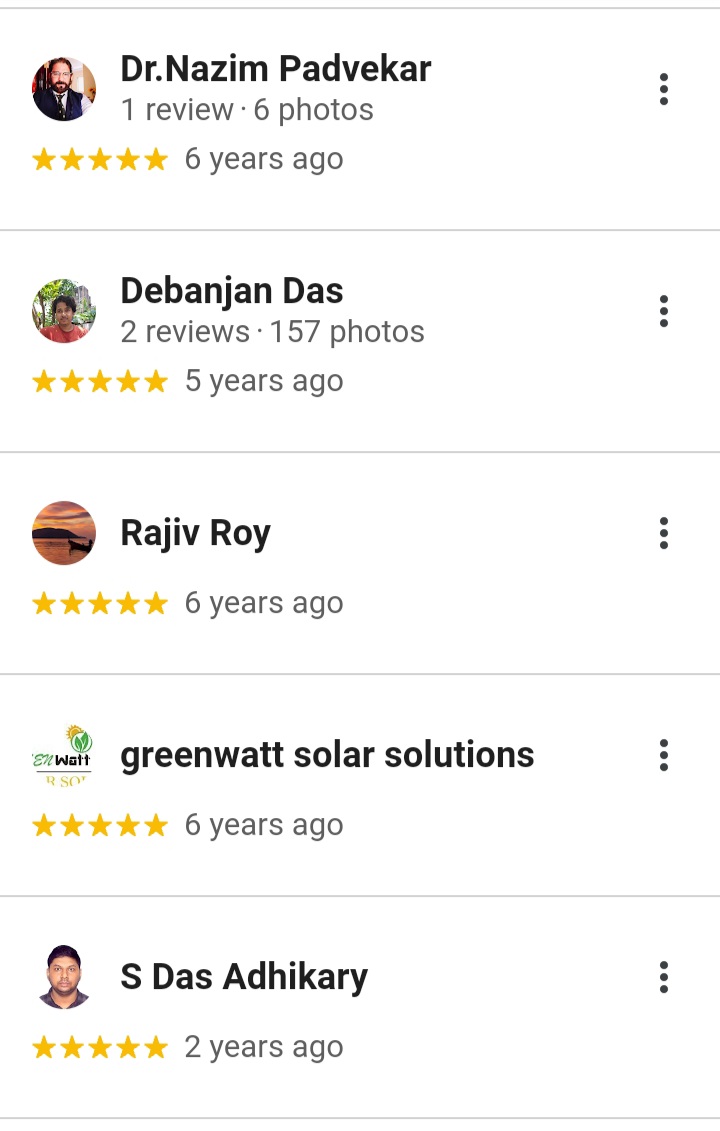
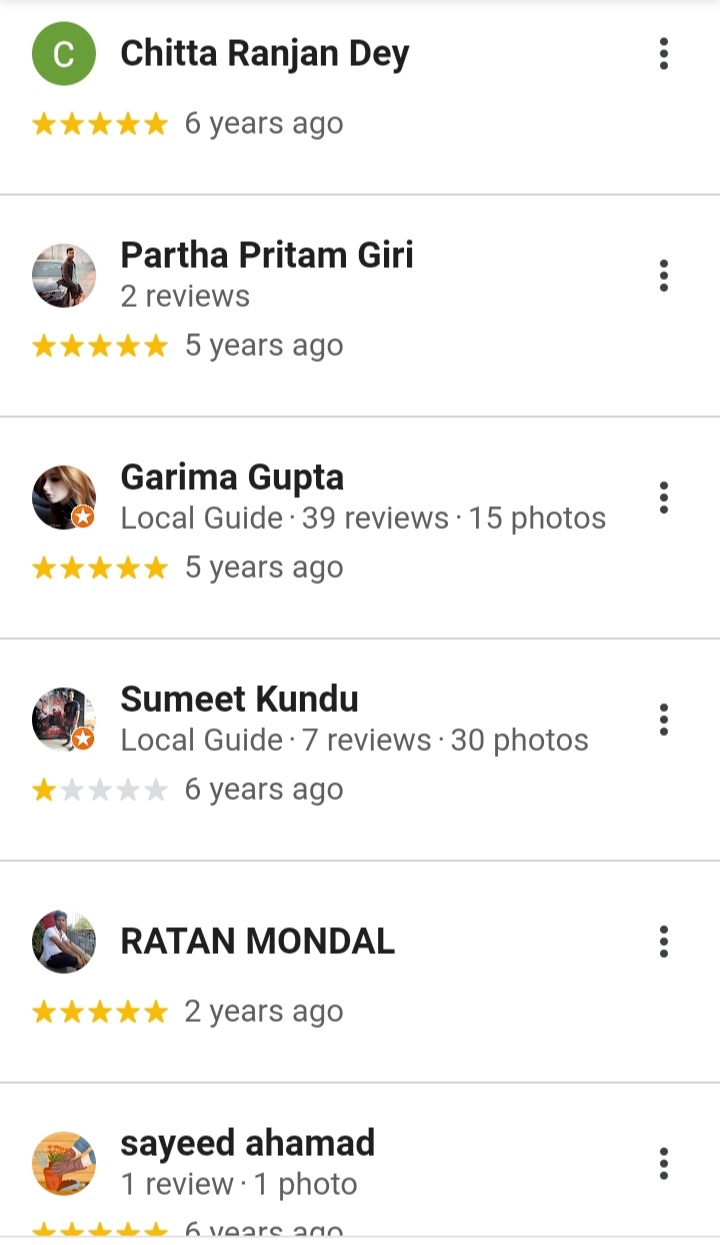
Reviewers praise the quality of instructors and the ease with which complex topics are explained, according to the Institute of Solar Technology Advisors.
Focus on Entrepreneurship:
IST aims to empower students to become solar entrepreneurs, providing them with the knowledge and skills to start their own businesses in the solar field
Support and Resources:
IST provides resources like an e-library and round-the-clock support, fostering self-learning and development.
Alumni Success:
IST boasts a network of successful alumni who have made notable contributions to the solar industry.
Pioneer in PV Solar Technology:
IST is recognized as a leader in PV solar technology training and has been an academic partner with the national and international University
Quick Inquiry Form
Admission Going on for
PV Technology and Business Management - Techno Commercial Training (Online)
Today's FLAT Discount 20% From:
1st Week of Nov - 2026

Course Duration: 2 + 1 Months
Submit Registration (Online Course)Solar Project Design Master Course (Online)
Today's FLAT Discount 20% From:
1st Week of Nov - 2026
Course Duration: 2 + 1 Months
Submit Registration (Online Course)Solar Power EV Charging Station Development (Online)
Today's FLAT Discount 20% From:
1st Week of Nov - 2026
Course Duration: 2 + 1 Months
Submit Registration (Online Course)Li-ion Battery Pack Assembly (Online)
Today's FLAT Discount 20% From:
1st Week of Nov - 2026
Course Duration: 2 + 1 Months
Submit Registration (Online Course)
Visit our Google Map


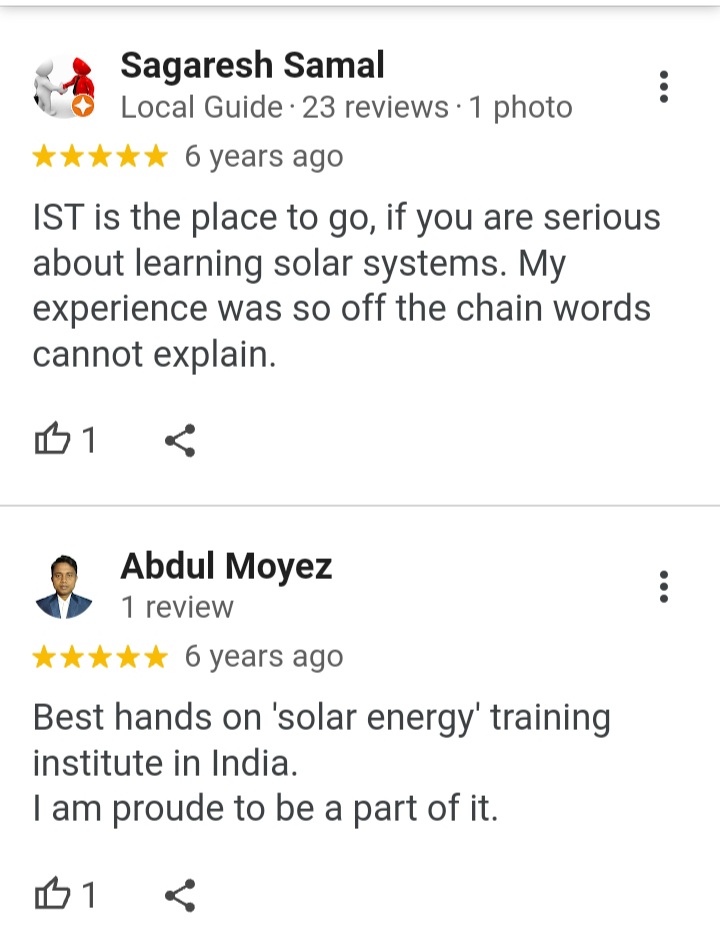
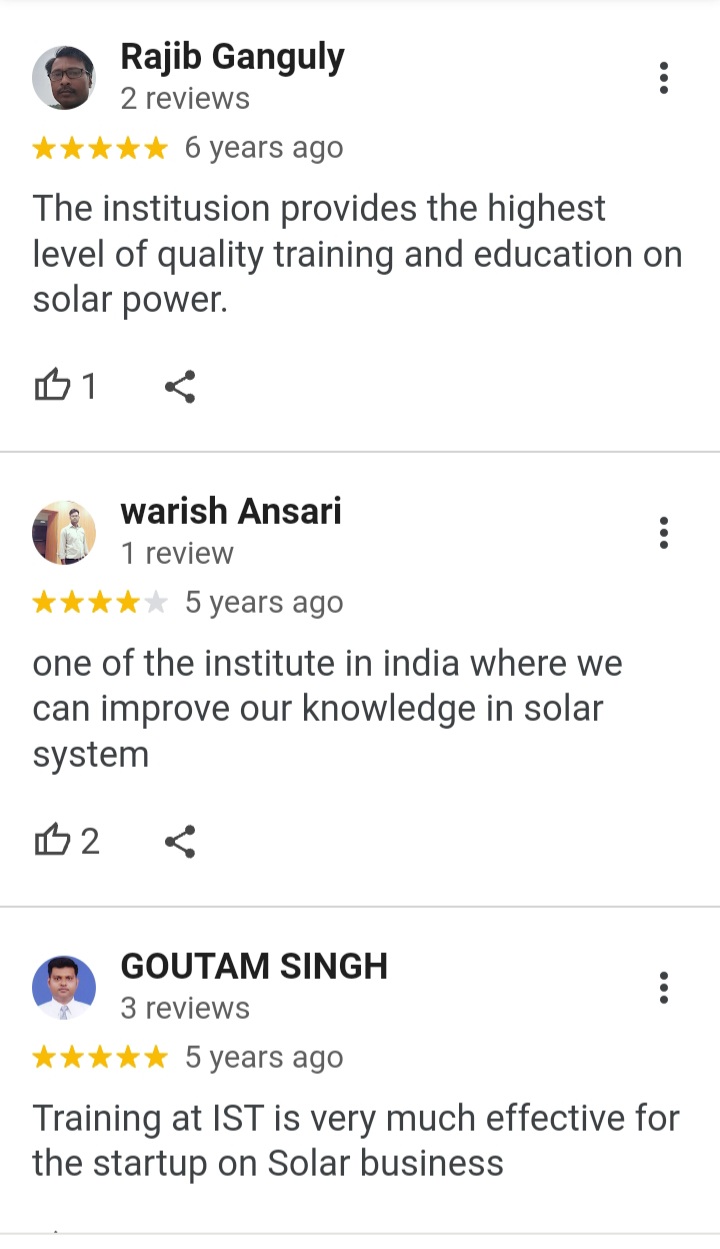
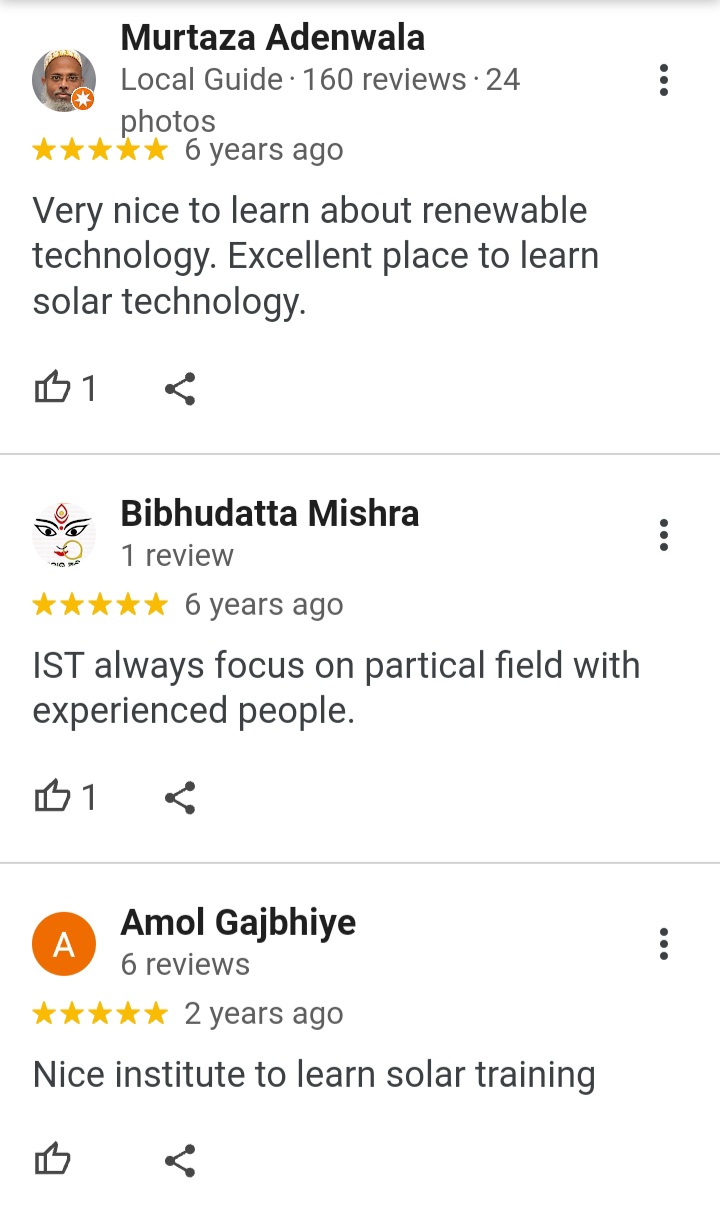
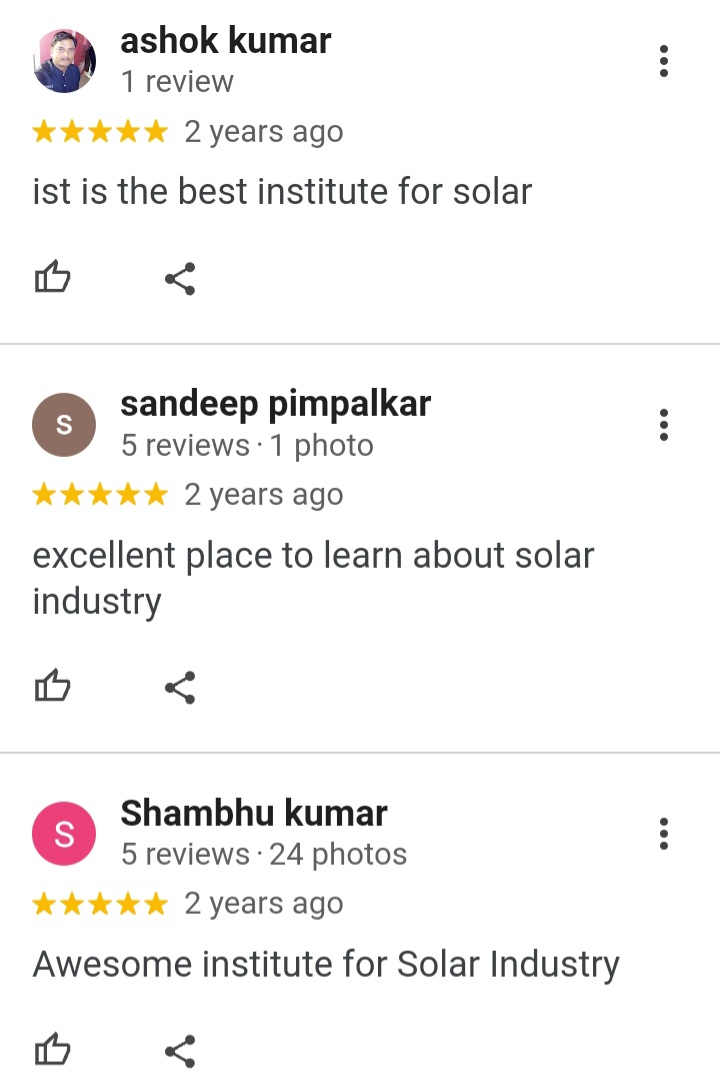

EMR aims to guide, encourage, and uphold the highest quality standards of professionalism ...
Subscribe here to get interesting stuff and updates!
Subscribe here

View all Job 2025

























Interactive Classes

Practical & Doubt Classes

E-Library Study Materials

Online Examination