Search IST Courses
Find PV Solar and Lithium-ion Battery course near by you
Similar Search results: On Grid Rooftop Commercial Plant Simulation IST PVSolar Simulator V8
Similarity search results are visible in the form of an analysis of saved visitor search keywords and a Google Console update. Search result listed bellow. To know more, go to Home Page
Institute of Solar Technology (IST) an autonomous body for startups in solar energy training, have a milestone with 12 years of experience in Entrepreneurship Business Development, a long history of operation. Institute was founded in 2012, Indian oldest institute. To know more look "About Us" section.
8760-Hour Solar Simulation Improves Rooftop PV Generation
A year has 8,760 hours. An 8,760-hour simulation calculates solar irradiance, cell temperature, and power output separately for every single one of them, using real (or representative) hourly weather data for the site.
Utility-scale ground-mount systems are relatively forgiving of simulation shortcuts: uniform tilt, uniform azimuth, minimal shading. Rooftops are the opposite case, and that's exactly where hourly resolution earns its keep.
Multiple roof planes, multiple micro-climates. A single rooftop system often spans two or three faces at different tilts and azimuths — a south-facing main roof plus an east-facing dormer, say. Each face has its own hourly irradiance curve; a monthly average can't capture how the east face's morning peak and the south face's midday peak interact with a shared inverter's clipping threshold.
Shading is a time-of-day problem, not an annual-average problem. A chimney, a neighboring tree, or an HVAC unit doesn't cast a flat "5% shading loss" — it casts a shadow that sweeps across specific modules at specific hours, on specific days of the year, with a specific angular geometry. Only an hour-by-hour (ideally sub-hourly) simulation, working from real sun-position and shading-object geometry, gets this right. Annualized shading factors routinely mis-estimate the loss by 2-3x in either direction.
Temperature swings hour by hour. Module output drops meaningfully as cells heat up — typically -0.3% to -0.4% per °C above 25°C. On a rooftop with limited airflow underneath the array, a module might run 15-20°C hotter than ambient at 1pm in summer. Capturing that requires an hourly cell-temperature model (using ambient temperature, wind speed, and irradiance at that specific hour), not a monthly average temperature.
Inverter clipping is inherently a peak-moment phenomenon. If a system is sized with a DC/AC ratio above 1.0 (common for cost optimization), the inverter will clip excess DC power during a fairly narrow band of high-irradiance hours around midday in summer. A monthly-average model simply cannot see this clipping window; only an hourly (or sub-hourly) simulation can quantify how much energy is actually lost to it.
8760-Hour Solar Simulation Improves Rooftop PV Generation
A year has 8,760 hours. An 8,760-hour simulation calculates solar irradiance, cell temperature, and power output separately for every single one of them, using real (or representative) hourly weather data for the site.
Utility-scale ground-mount systems are relatively forgiving of simulation shortcuts: uniform tilt, uniform azimuth, minimal shading. Rooftops are the opposite case, and that's exactly where hourly resolution earns its keep.
Multiple roof planes, multiple micro-climates. A single rooftop system often spans two or three faces at different tilts and azimuths — a south-facing main roof plus an east-facing dormer, say. Each face has its own hourly irradiance curve; a monthly average can't capture how the east face's morning peak and the south face's midday peak interact with a shared inverter's clipping threshold.
Shading is a time-of-day problem, not an annual-average problem. A chimney, a neighboring tree, or an HVAC unit doesn't cast a flat "5% shading loss" — it casts a shadow that sweeps across specific modules at specific hours, on specific days of the year, with a specific angular geometry. Only an hour-by-hour (ideally sub-hourly) simulation, working from real sun-position and shading-object geometry, gets this right. Annualized shading factors routinely mis-estimate the loss by 2-3x in either direction.
Temperature swings hour by hour. Module output drops meaningfully as cells heat up — typically -0.3% to -0.4% per °C above 25°C. On a rooftop with limited airflow underneath the array, a module might run 15-20°C hotter than ambient at 1pm in summer. Capturing that requires an hourly cell-temperature model (using ambient temperature, wind speed, and irradiance at that specific hour), not a monthly average temperature.
Inverter clipping is inherently a peak-moment phenomenon. If a system is sized with a DC/AC ratio above 1.0 (common for cost optimization), the inverter will clip excess DC power during a fairly narrow band of high-irradiance hours around midday in summer. A monthly-average model simply cannot see this clipping window; only an hourly (or sub-hourly) simulation can quantify how much energy is actually lost to it.
Institute of Solar Technology: Offers course on PV Technology & Business Management, focusing on project development and quality management.
Key aspects covered in solar business courses:
- Technical Knowledge: Understanding solar panel technology, system design, installation, and maintenance.
- Project Management: Skills in planning, executing, and overseeing solar projects, including budgeting and procurement.
- Business Planning: Developing a business plan, conducting market research, and understanding legal and financial aspects.
- Marketing and Sales: Learning how to market solar services, source leads, and manage customer relationships.
- Entrepreneurship: Developing entrepreneurial skills, including innovation, leadership, and team building.
Active Participant Presence in Learning:
- Engaging Activities:Incorporating interactive learning activities, such as group discussions, role-playing, simulations, and hands-on projects, can enhance participant engagement and knowledge retention.
- Real-World Applications:Linking the training content to real-world applications, such as case studies and site visits, can help participants understand the practical relevance of the knowledge and skills being taught.
- Technology Integration:Utilizing technology, such as virtual reality or online platforms, can provide immersive and interactive learning experiences, especially for complex tasks.
- Collaborative Learning:Fostering a collaborative learning environment where participants can learn from each other's experiences and perspectives can enhance the overall learning experience.
Discover the PV business and expand your professional options
Solar Project Design Master Course (Rooftop and Large solar system)
 Huge job opportunity Solar Design engineer job
Search Solar Design Engineer Job
For working professionals, early morning or night class slot available
👉 Introduce with Mentor
Solar Power Plant Releated Cloud Software access -
👉Know about IST SunPower System solar software
- Site Assessment
- Hybrid On-Grid System Simulation
- Solar DCDB Design
- Solar ACDB Design
- Solar Power Plant SLD
- Solar Project Quotation
- Solar Project Bankability Report
- Solar Power Plant BOQ
Admission going on for 2nd Batch of Nov - 2026
PV Technology & Business Management - Business Course (Online)
(Rooftop and Large solar system)

Institute of Solar Technology (IST) cover business opportunities in Residential, Public Sector, Commercial and Industry.
Solar Power Plant Releated Cloud Software access -
👉Know about IST SunPower System solar software
- Site Assessment
- Hybrid On-Grid System Simulation
- Solar DCDB Design
- Solar ACDB Design
- Solar Power Plant SLD
- Solar Project Quotation
- Solar Project Bankability Report
- Solar Power Plant BOQ
Admission going on for Nov - 2026
Rooftop Hybrid Solar Simulation Software RHS Version-11.12
Rooftop Hybrid Solar (RHS) simulation software, such as Rooftop Hybrid Solar Simulation Software RHS V 11.12, is designed to model, design, and optimize grid-connected solar PV systems with battery energy storage. These tools simulate system performance under varying solar irradiation, battery state-of-charge, and grid-connected,, or off-grid scenarios, facilitating technical analysis.
State-Wise List of Solar Inverter Manufacturers
- Gujarat: Goldi Solar, Helox Power, Citizen Solar, ASEL, Hi-Rel Power Electronics, Cathode Power, UR Energy, Crystal Solar Energy, Xwatt Energy, Gronsol Solar Inverter (Surat).
- Maharashtra: Polycab, Praflux, Tata Green Batteries, KSolare Energy, EnerTech UPS, Selec Controls, Kirloskar Solar, Waaree Energies, UCS, ProstarM Info Systems, Vertiv Energy (formerly Emerson).
- Haryana: Luminous Power Technologies, AEI, Envisun Solar, Eastman, Smarten, Electrower Technologies, Loom Solar, Livfast, Livguard, Himalayan Solar, OOMIPL.
- Tamil Nadu: Swelect Energy Systems, Feston, IPC Technologies, Sakthi Electrical Control, Hotsun Solar Systems, SIASPL, Evolve Energy, Vispra, Kongu Engineers.
- Delhi/NCR: MuscleGrid, Luxntek, Friend Solar, Turbosun, Omcam Power, Galo Energy, TPIL, UTL, Sun Stellar, Usha Shriram Enterprises, Servotech.
- Uttar Pradesh: NEPL, Khaitan Solar, Solarvin, Statcon Energiaa, Sanguard, Tracksun Solar, Lento, Enventa Power, ARM Power, Ritika, Livsol, Fortuner, SunGarner.
- Kerala: Sakthi Inverters, Reverie Solar, Murickens, Electra, Fuze Batteries, Lagnuvo, Beacon Power Systems, V-Guard, Keltron.
- Karnataka: Maruthi Solar Systems, SETfusion, GTD Labs, Powerone Micro Systems, POM Power, Techser Power Solutions, Pace Power Systems, ABB India (Bengaluru).
- West Bengal: Thea, Exide Industries, Agni Power & Electronics, Signotron, Optimal Power Synergy.
- Uttarakhand: Sunflix Energia, KamTech, NECS Electric, Eapro Global.
- Odisha/Telangana: IYRO Solar (Odisha), Glow Power Technologies, Firefly Technologies, Analogics Tech, Solar Idea, PPS Enviro Power (Telangana).
- Himachal Pradesh/Rajasthan: Su-kam Power (Himachal Pradesh), Duak, One Sun, Kayam Solar, Novergy (Rajasthan).
Here's a more detailed look at what makes IST stand out:
Practical Training:
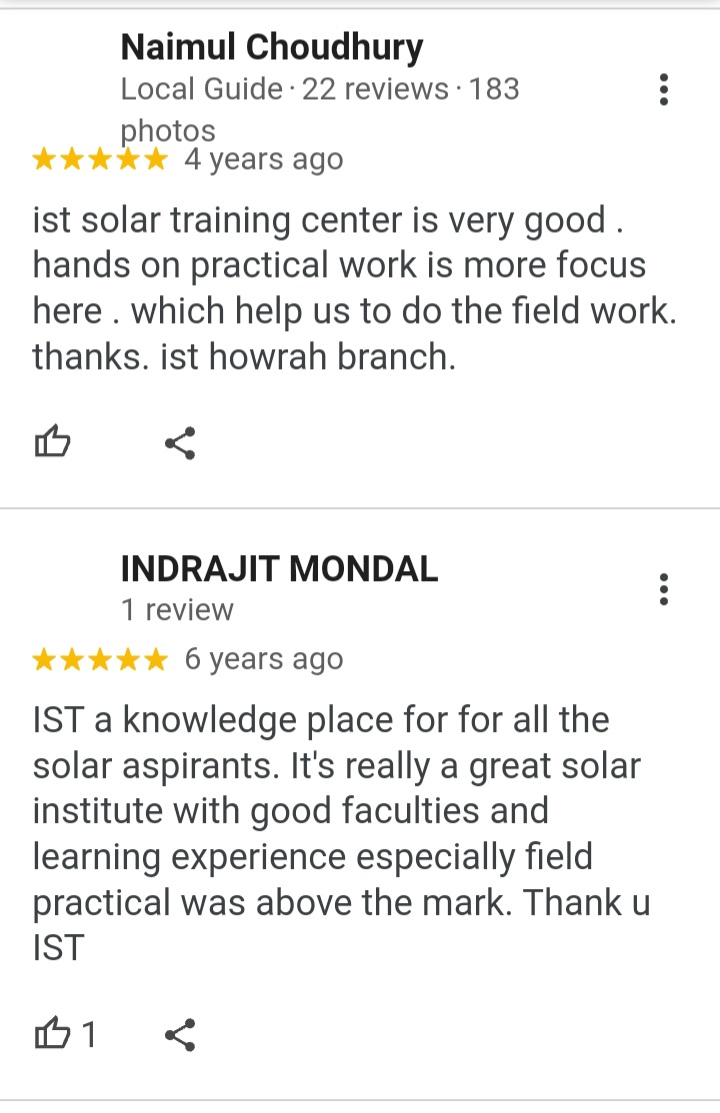
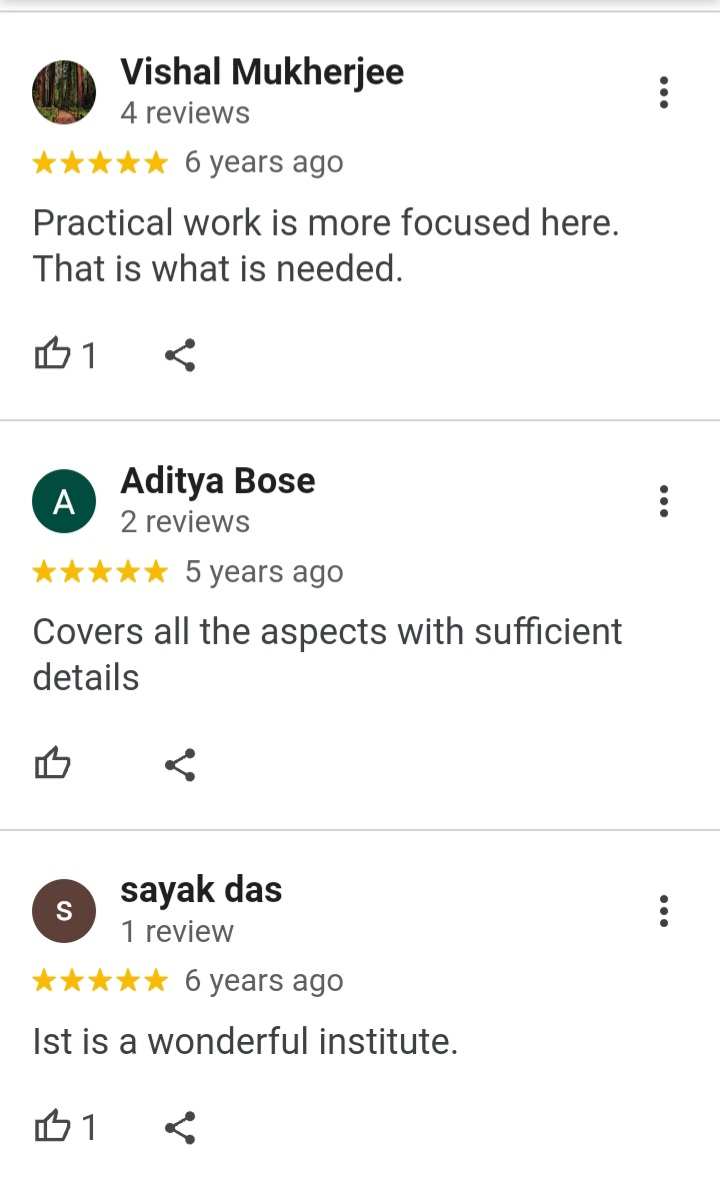
IST focuses on providing practical, hands-on training in the solar sector. This includes training on the latest products and technologies used in solar installations.
Industry-Standard Syllabus:
The institute uses an industry-standard syllabus, ensuring that students are equipped with the knowledge and skills needed for the solar industry.
Expert Faculty:
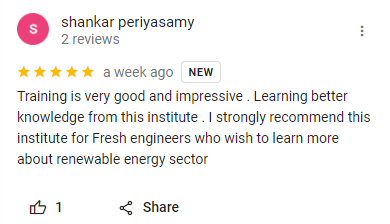
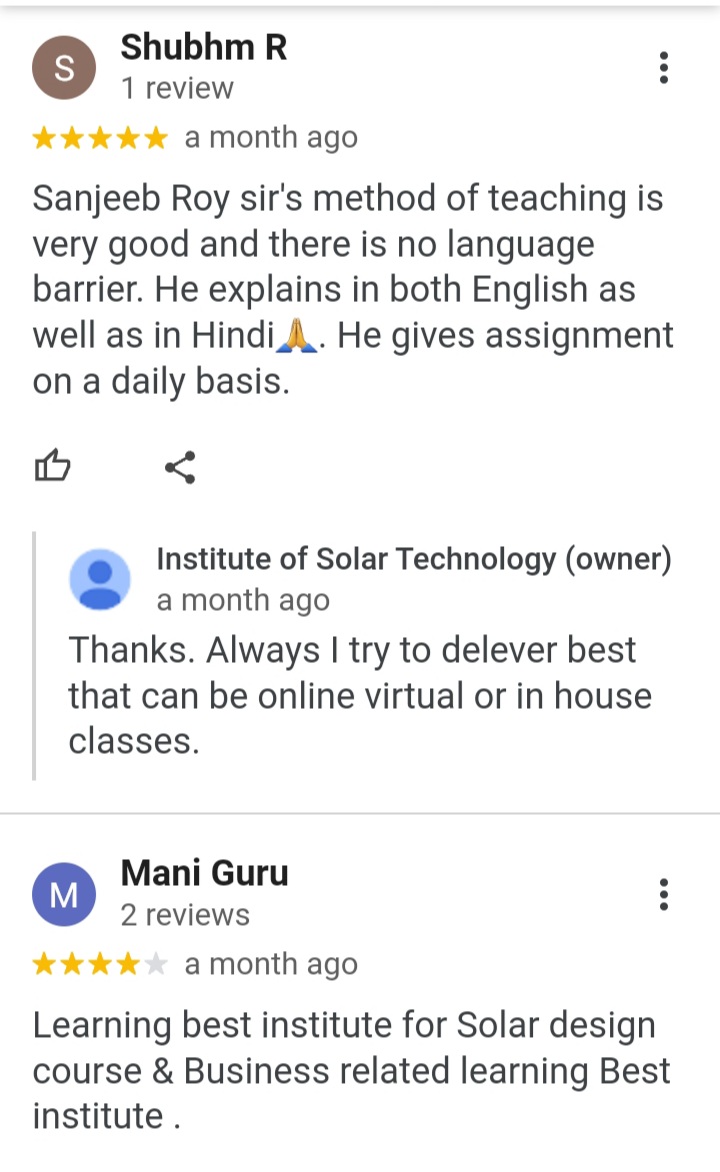
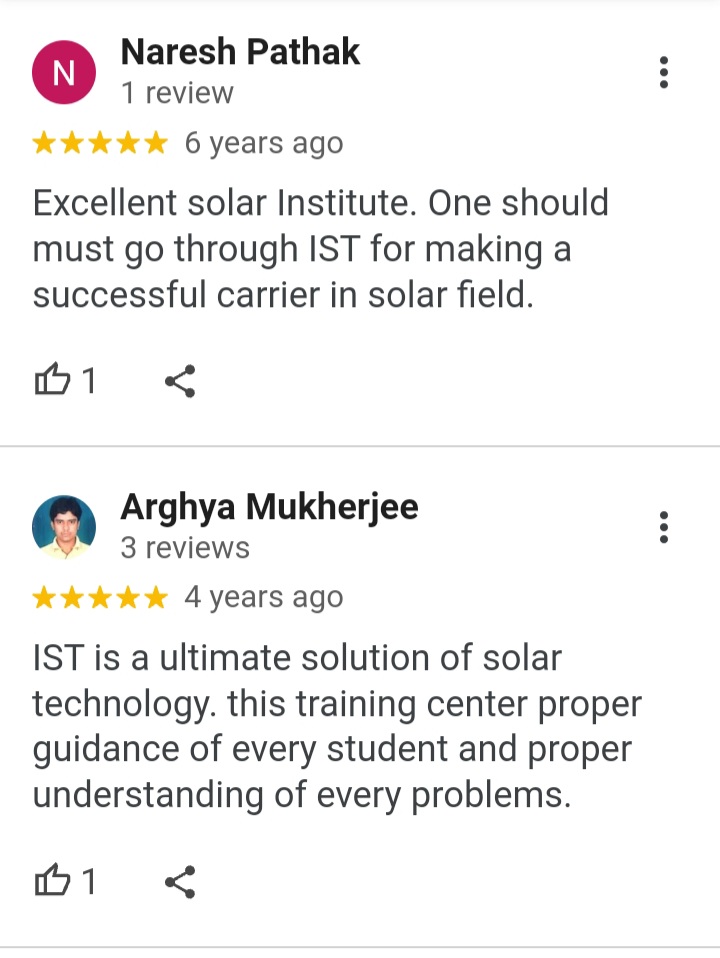
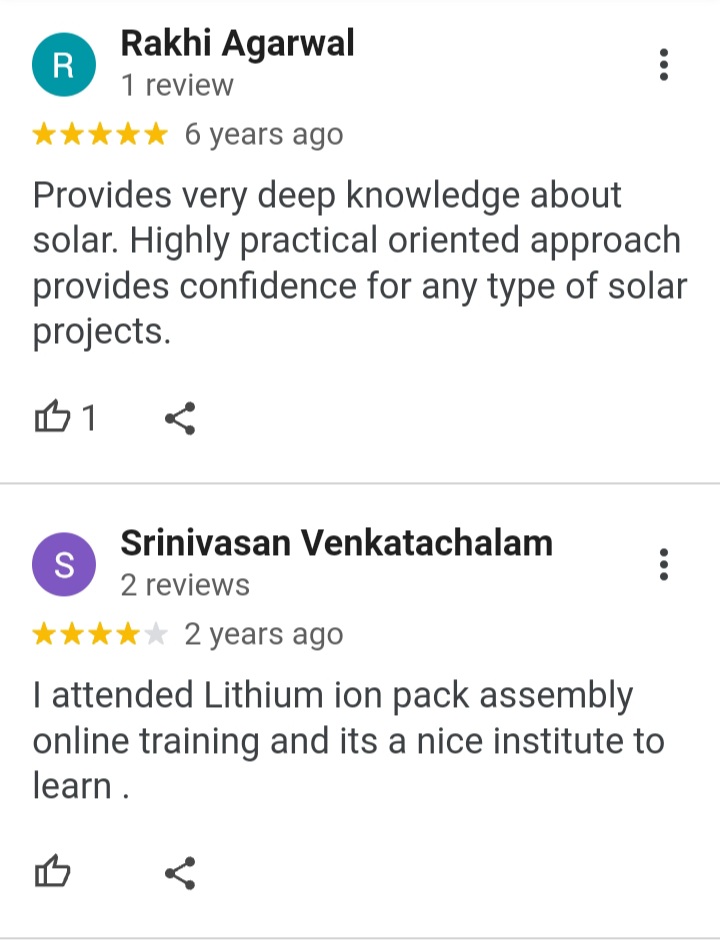
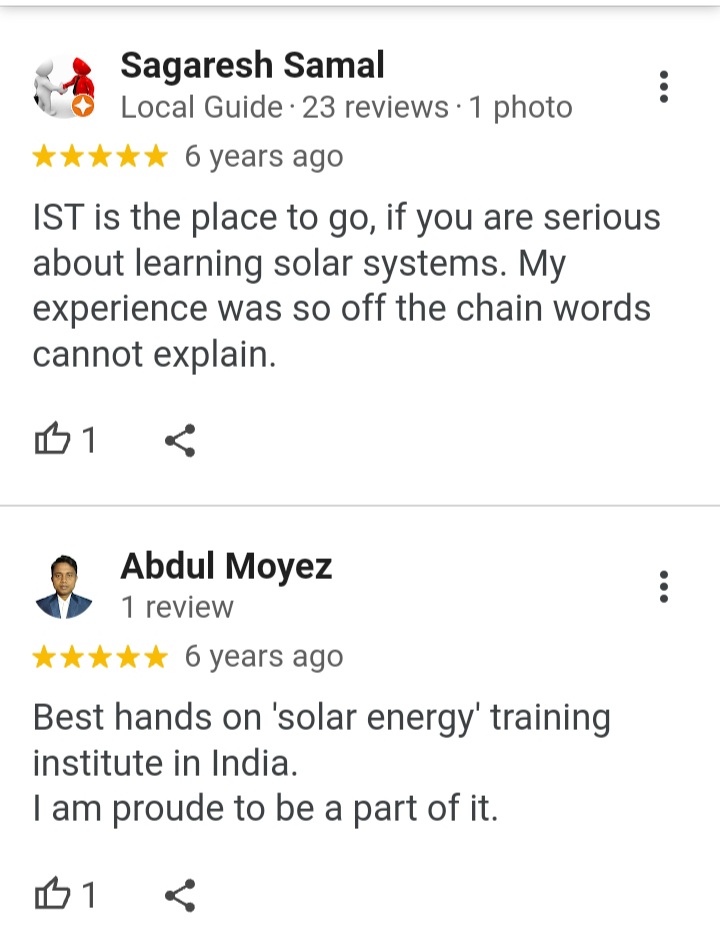
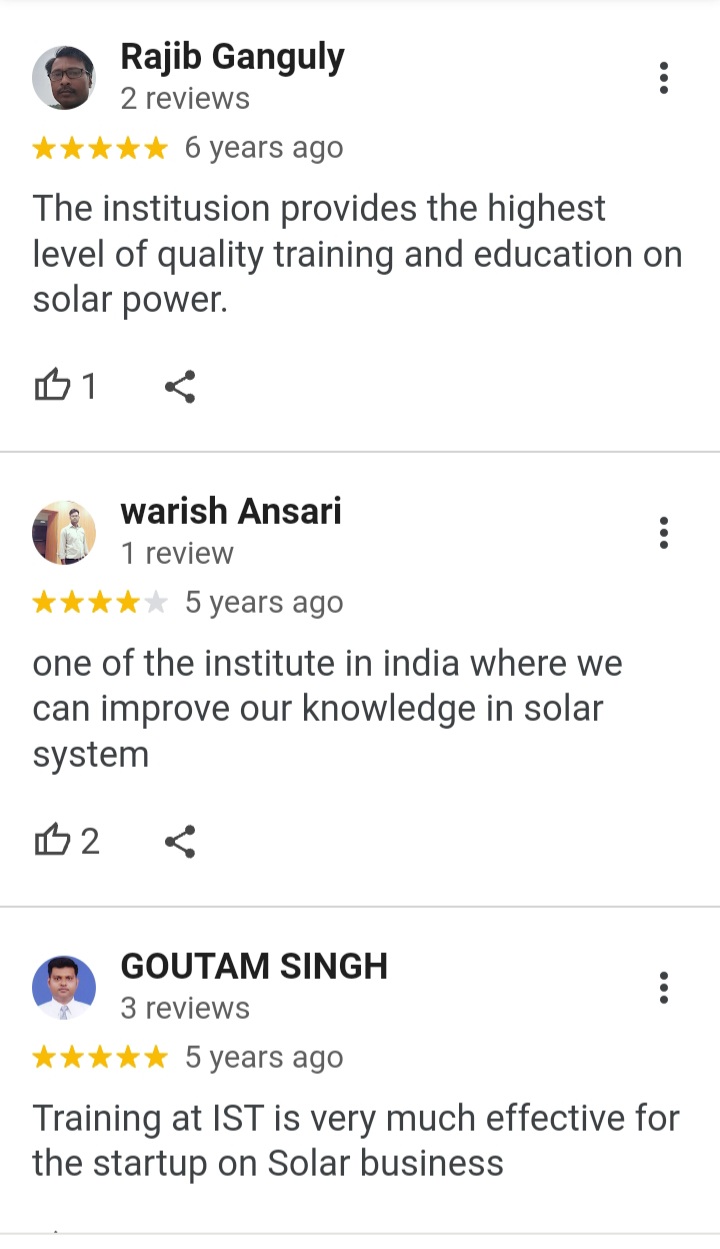
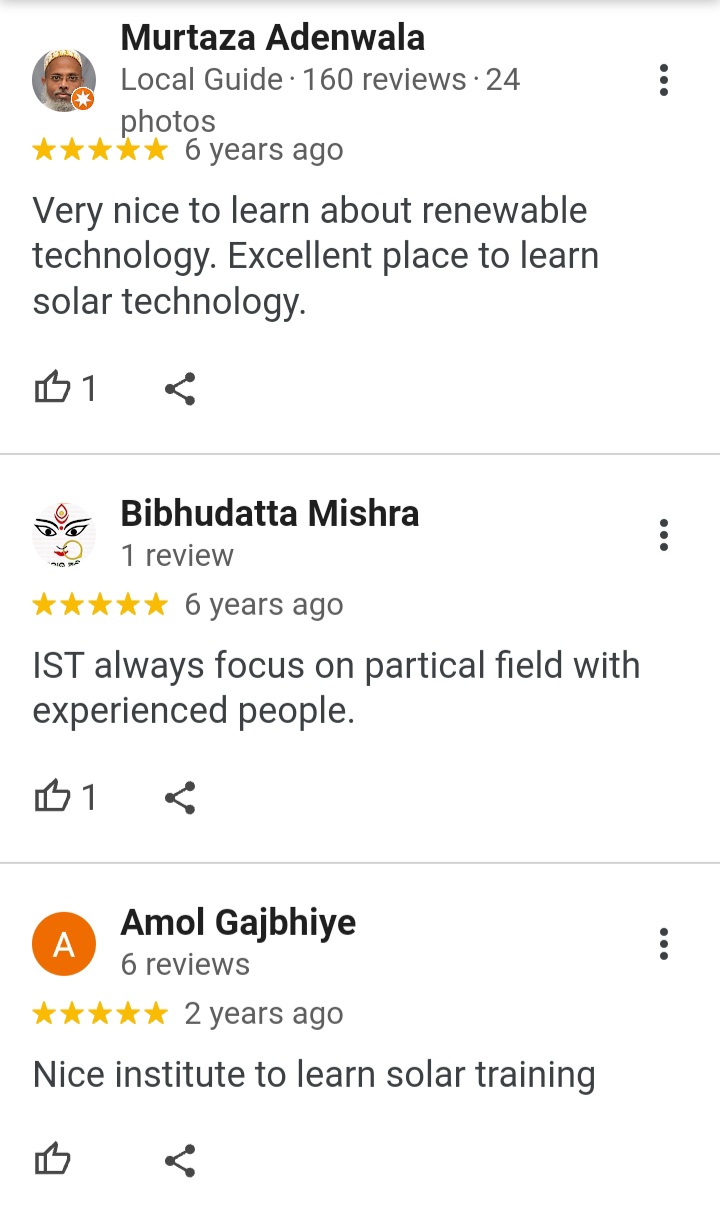
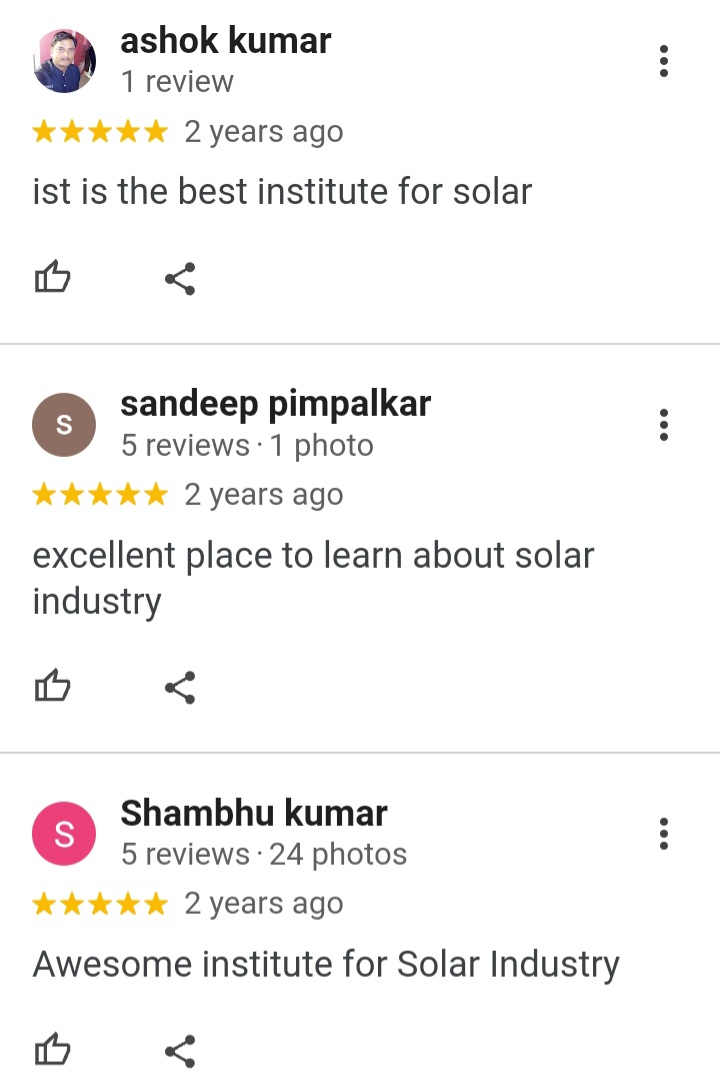
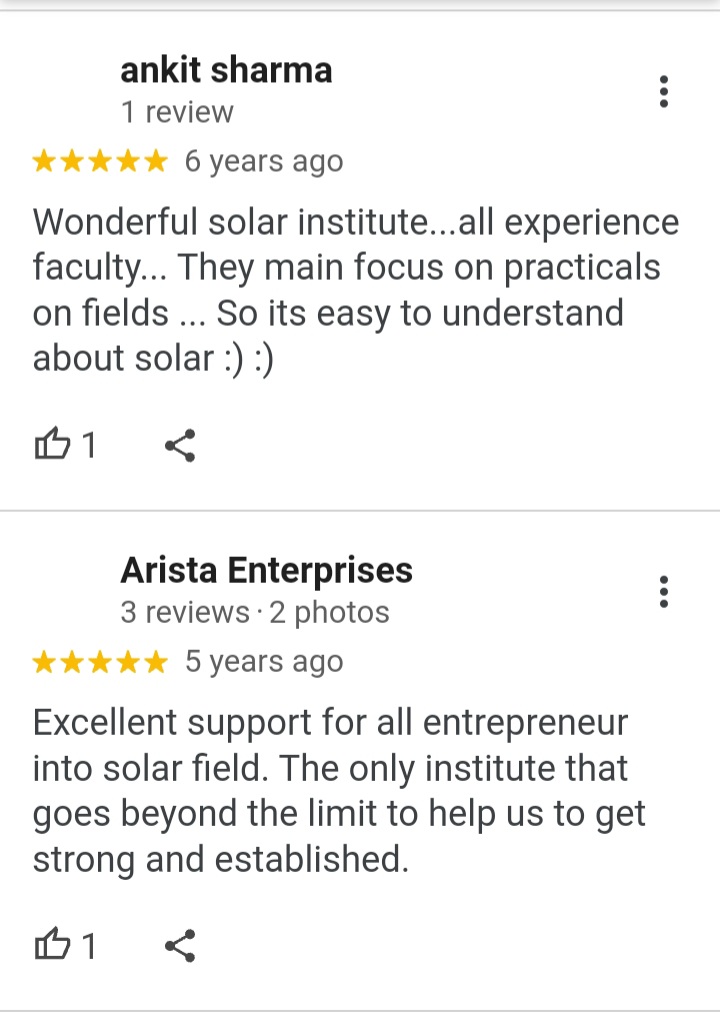
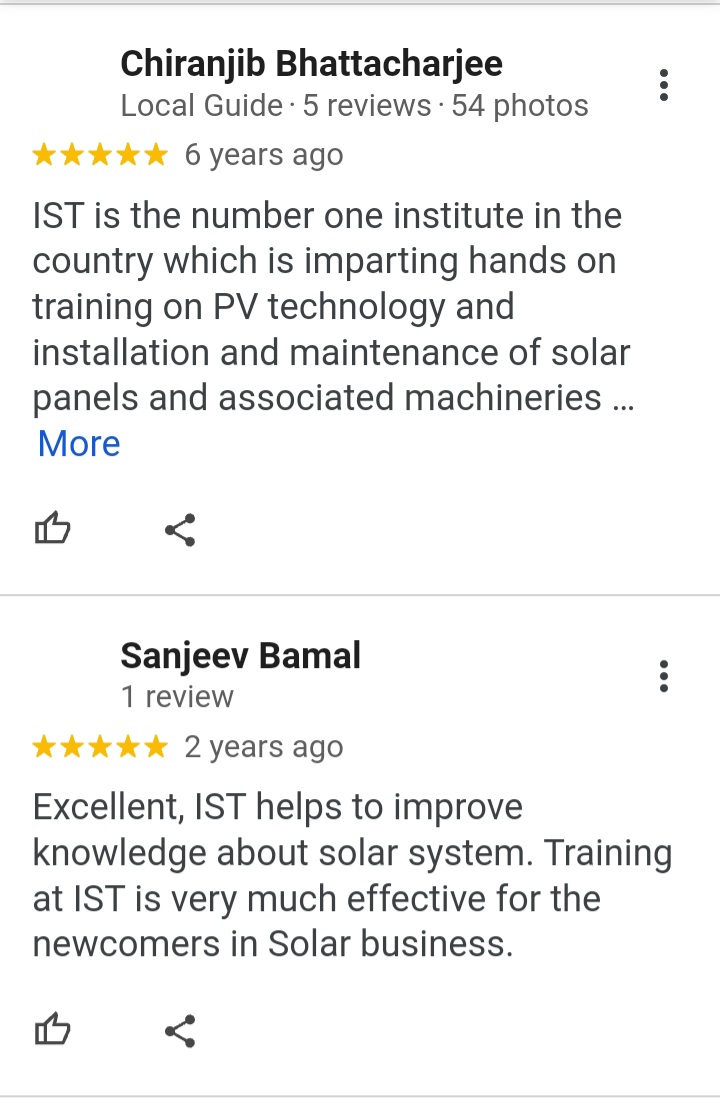
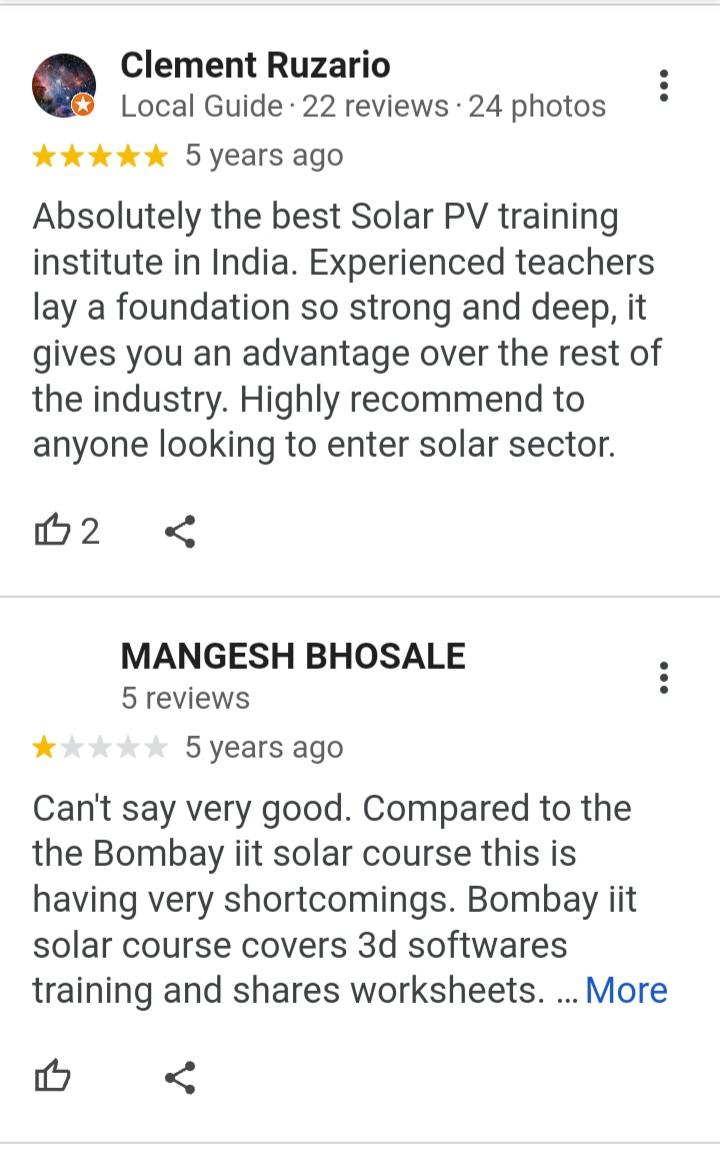
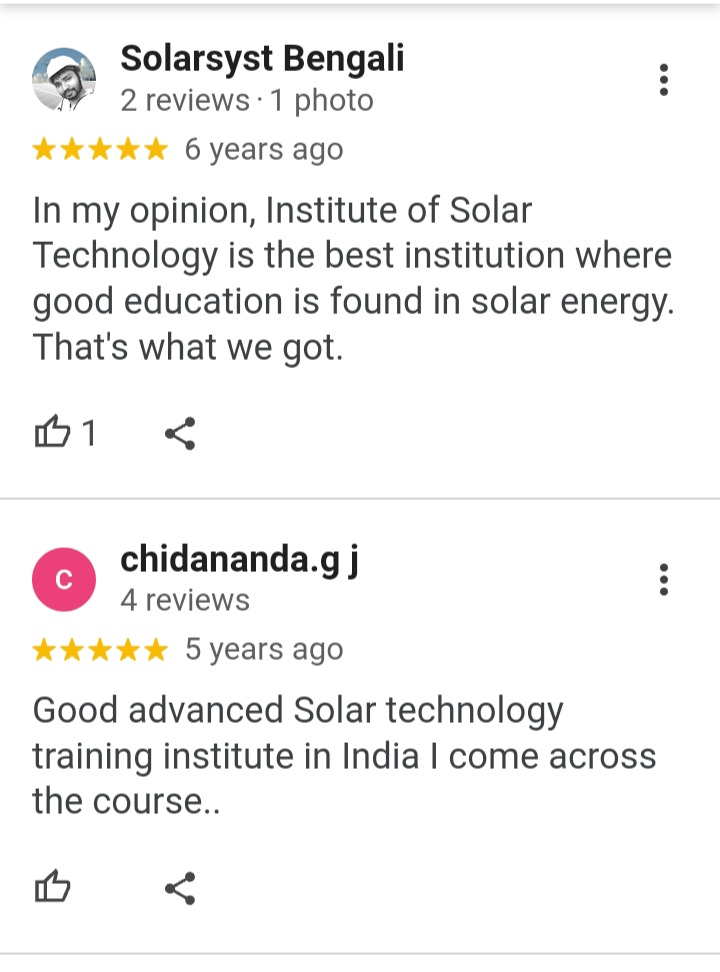
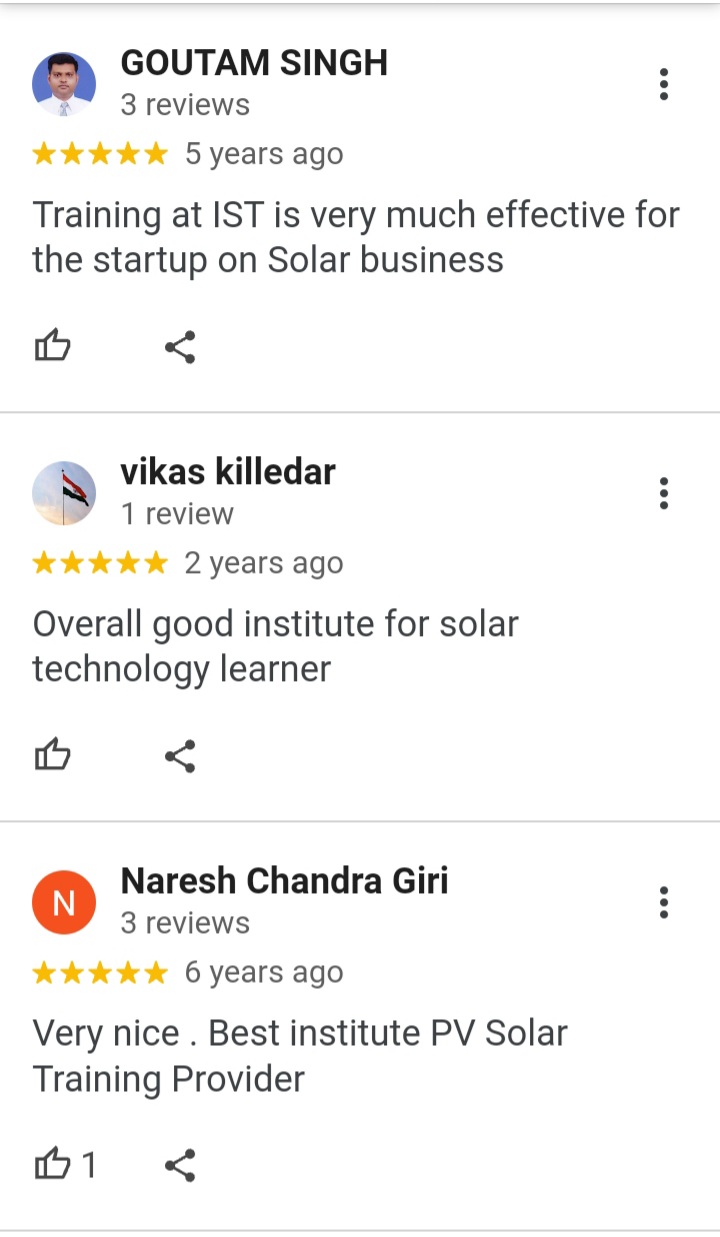
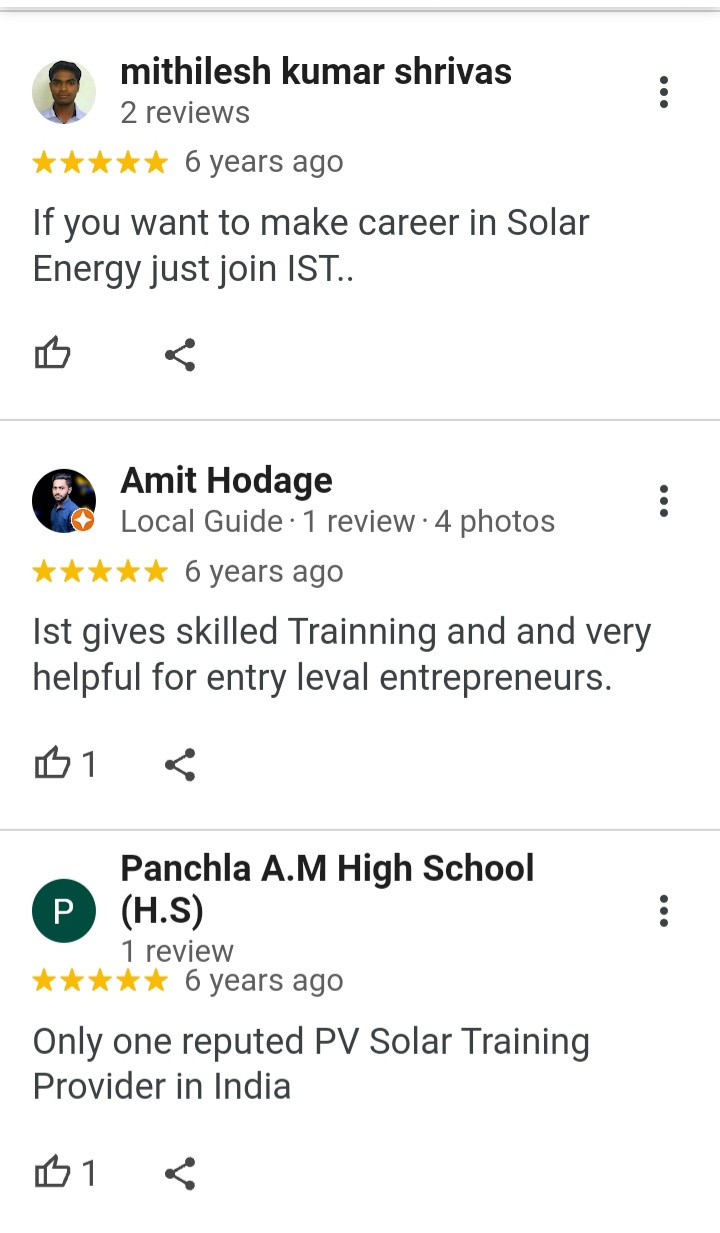
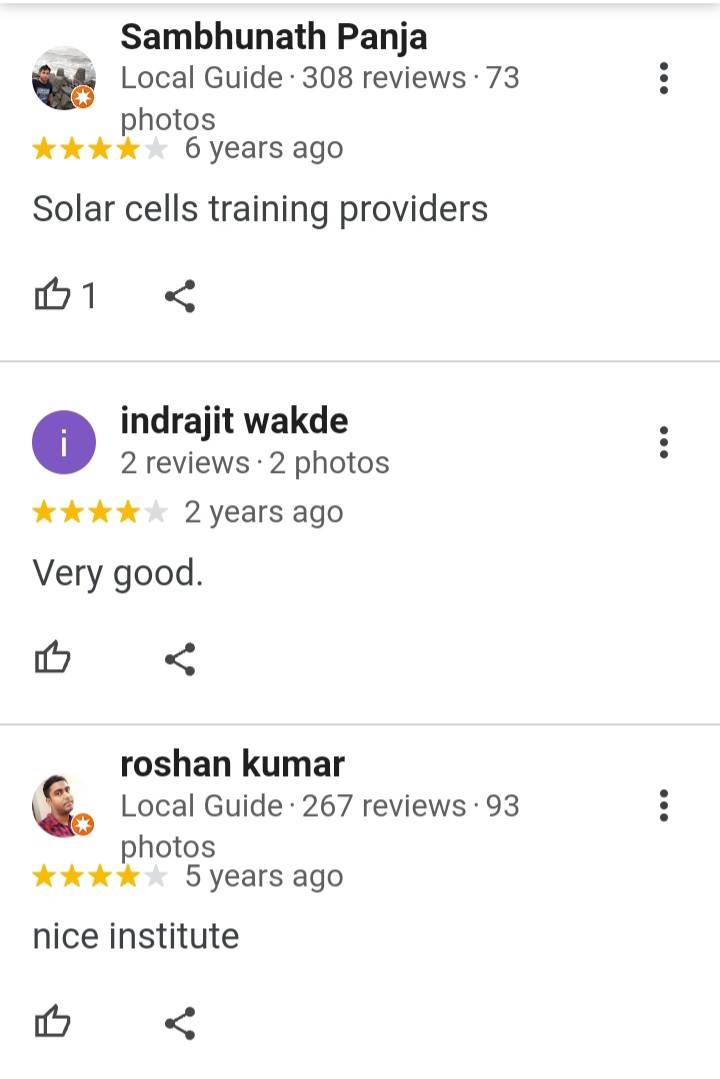
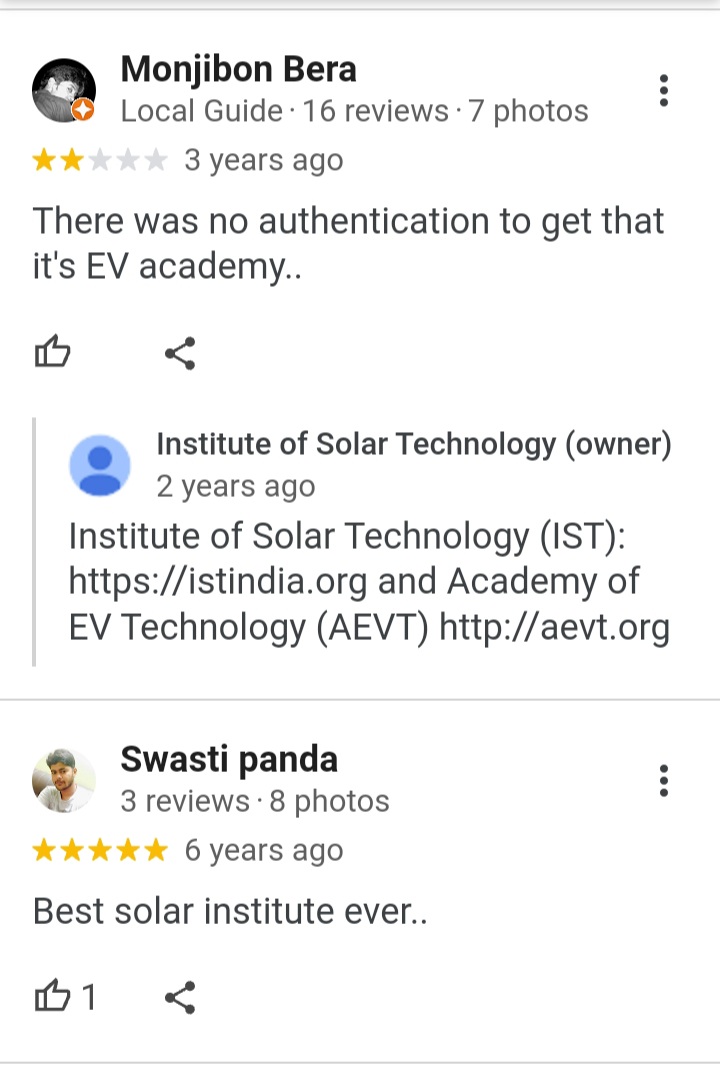
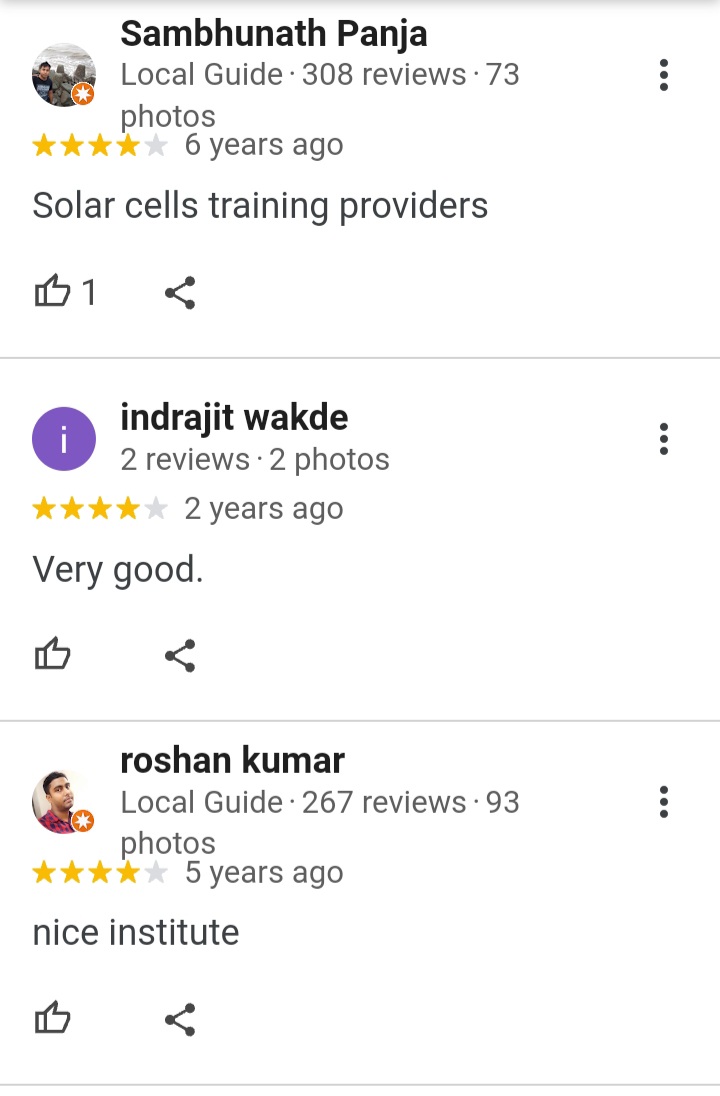
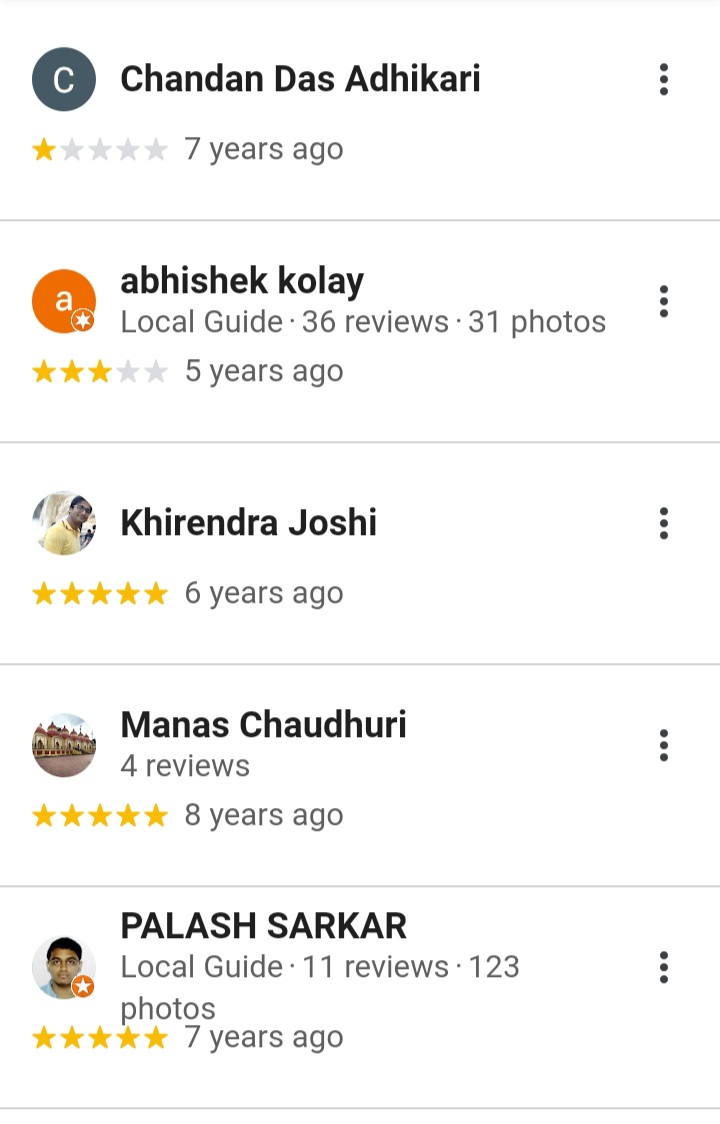
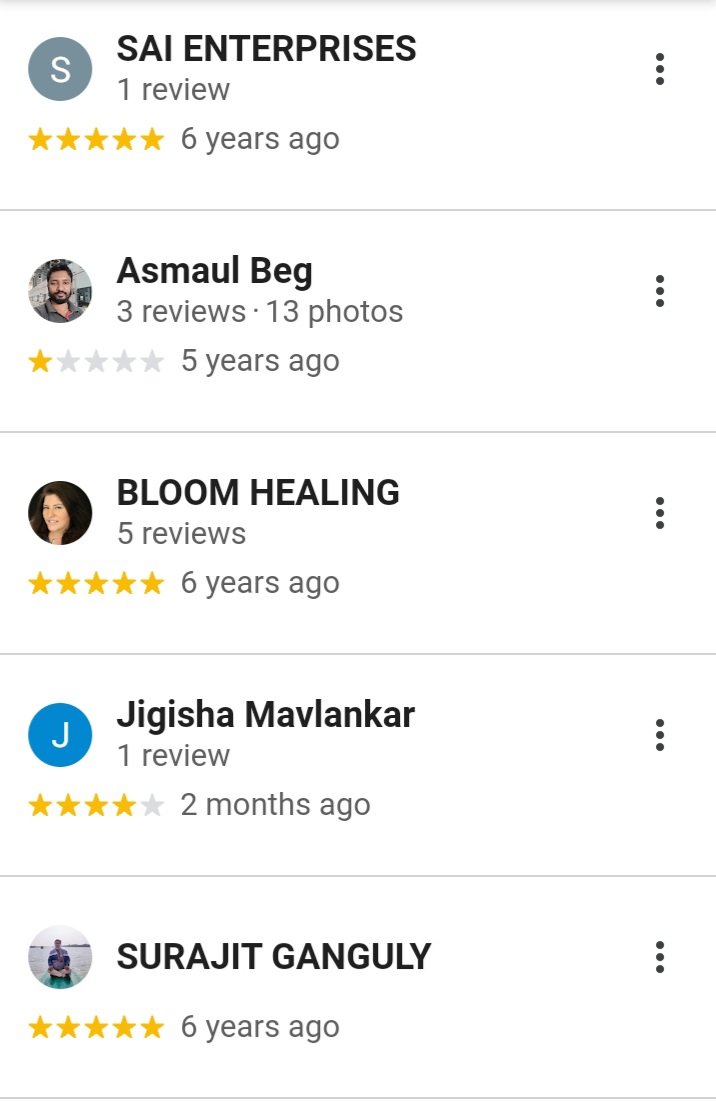
Reviewers praise the quality of instructors and the ease with which complex topics are explained, according to the Institute of Solar Technology Advisors.
Focus on Entrepreneurship:
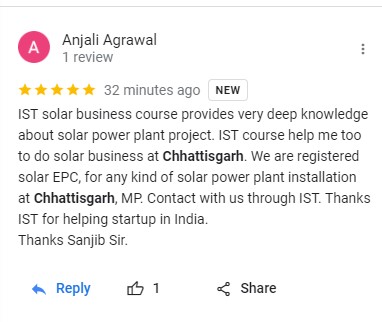
IST aims to empower students to become solar entrepreneurs, providing them with the knowledge and skills to start their own businesses in the solar field
Support and Resources:
IST provides resources like an e-library and round-the-clock support, fostering self-learning and development.
Alumni Success:
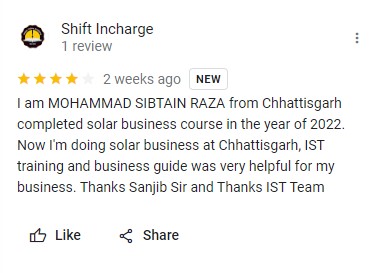
IST boasts a network of successful alumni who have made notable contributions to the solar industry.
Pioneer in PV Solar Technology:
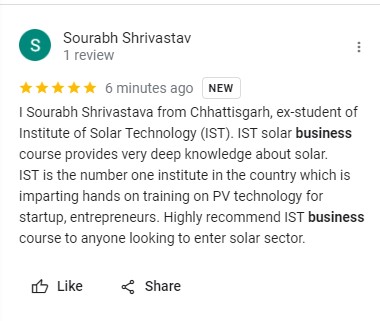
IST is recognized as a leader in PV solar technology training and has been an academic partner with the national and international University
Quick Inquiry Form
Admission Going on for
PV Technology and Business Management - Techno Commercial Training (Online)
Today's FLAT Discount 10% From:
1st Week of Nov - 2026

Course Duration: 2 + 1 Months
Submit Registration (Online Course)Solar Project Design Master Course (Online)
Today's FLAT Discount 10% From:
1st Week of Nov - 2026
Course Duration: 2 + 1 Months
Submit Registration (Online Course)Solar Power EV Charging Station Development (Online)
Today's FLAT Discount 10% From:
1st Week of Nov - 2026
Course Duration: 2 + 1 Months
Submit Registration (Online Course)Li-ion Battery Pack Assembly (Online)
Today's FLAT Discount 10% From:
1st Week of Nov - 2026
Course Duration: 2 + 1 Months
Submit Registration (Online Course)

Visit our Google Map





EMR aims to guide, encourage, and uphold the highest quality standards of professionalism ...
Subscribe here to get interesting stuff and updates!
Subscribe here

View all Job 2025



























Interactive Classes

Practical & Doubt Classes

E-Library Study Materials

Online Examination